


Description
The Aerospace Grade 1K Lightweight Carbon Fiber Prepreg (spec: CWP100/42%-1000) is a composite material designed for applications requiring high precision and low weight. It consists of 1K carbon fibers (1000 filaments per tow) impregnated with various resin systems, suitable for both small complex components and large structural parts. Core specifications for the standard model are listed below:
Parameter | Specification |
|---|---|
Product Code | CWP100/42%-1000 |
Brand | QINI |
Carbon Fiber Grade | T300, Tensile Strength: >3500MPa |
Carbon Fiber Weight | 90-140g/m² |
Weaving Method | Plain / Twill |
Resin Content | 20-50% |
Width | 300-1500mm |
Roll Length | 1-100m (custom lengths available) |
Compatible Resins | Epoxy, bismaleimide, cyanate, phenolic, polyetheretherketone |
Reference curing conditions for standard epoxy resin:
Mold and pipe molding (golf clubs, fishing rods): 110℃ for 30 minutes + 140℃ for 90 minutes
General mold forming: Adjust based on product thickness, heat transfer efficiency and molding method.
Technical Parameters
Below is the complete range of QINI carbon fiber prepreg models with their respective specifications:
Code | 0° Fiber | 0° Density (g/m²) | 90° Fiber | 90° Density (g/m²) | Density (g/m²) |
|---|---|---|---|---|---|
CWP100-1k | 1K | 50 | 1K | 50 | 100 |
CWP200-3k | 3K | 100 | 3K | 100 | 200 |
CWP240-3k | 3K | 120 | 3K | 120 | 240 |
CWP280-6k | 6K | 140 | 6K | 140 | 280 |
CWP360-6k | 6K | 180 | 6K | 180 | 360 |
CWP400-12k | 12K | 200 | 12K | 200 | 400 |
CWP480-12k | 12K | 240 | 12K | 240 | 480 |
Code | Warp Fiber | Warp Weight (g/m2) | Weft Fiber | Weft Weight (g/m2) | Density (g/m2) | Thickness (mm) |
|---|---|---|---|---|---|---|
CWP200 | 3K | 100 | 3K | 100 | 200 | 0.2 |
Suitable production process | Characteristics |
Prepreg process, Vacuum Infusion Process, hand Lay-up, molding process, Holding pressure tank process | With high strength, high modulus, high temperature resistance, wear resistance, corrosion resistance, fatigue resistance, electrical conductivity, electric heating and infrared radiation and other excellent properties. |
QINI provides five resin systems to meet diverse industrial requirements. Maximum operating temperatures vary by resin type:
Epoxy resin: Up to 150℃, suitable for most aerospace and medical applications
Bismaleimide resin: Up to 250℃, for components exposed to elevated temperatures
Other resin systems: Custom curing conditions available upon technical consultation.
The manufacturing process adheres to strict industrial standards:
Fiber Selection: T300 grade 1K fibers are screened for uniform diameter (5-7μm) and consistent tensile strength.
Weaving: Fibers are woven into plain or twill patterns at 100 picks per minute to reduce fiber breakage.
Impregnation: Resin is uniformly applied via vacuum infusion, with 42% epoxy content for the standard CWP100/42%-1000 model.
Preparation: Prepreg is cooled to 10-15℃ to slow curing, with release film applied for surface protection.
Measurable performance characteristics of this 1K prepreg include:
Surface roughness: Ra < 0.5μm
Tensile strength: 3500MPa at 1.7g/cm³ density
Coefficient of thermal expansion: 1.5×10⁻⁶/℃
Epoxy resin meets ISO 10993 biocompatibility standards for non-implantable medical devices.
Application Area
 | Aerospace & AviationAircraft wing skins, engine nacelles, satellite antennas, connectors Military & Wind PowerMilitary components, wind turbine blade parts |
TransportationCar trim, hoods, roofs, bicycle frames, helmets |  |
 | MedicalSurgical tools, non-implantable devices |
Consumer & IndustrialLuggage, instrument cases, drones, sports equipment (rackets, fishing rods, skis). | 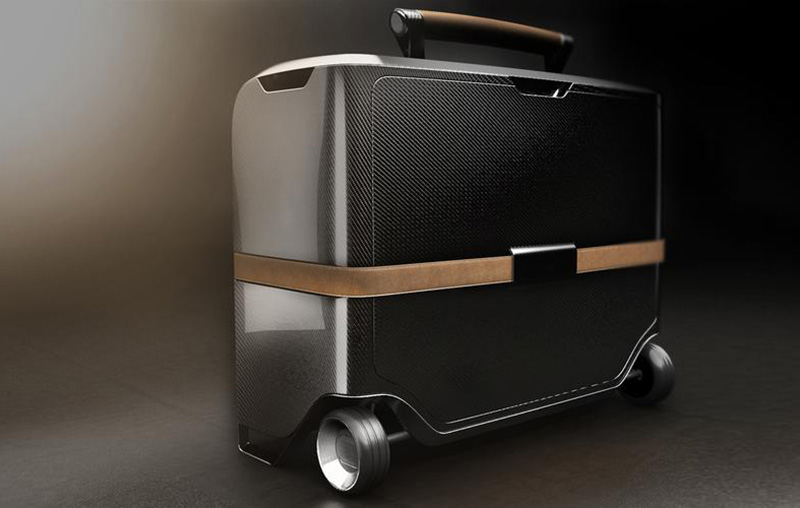 |
Maintenance
Proper handling extends product service life:
Cleaning: Use specialized cleaners to remove dust and stains; avoid acidic or alkaline solutions.
UV Protection: Prevent prolonged sunlight exposure to avoid surface cracking and fading.
Storage: Keep in a dry, ventilated environment at 10-15℃. Avoid high humidity and temperature. Conduct regular inspections during long-term storage.
FAQ
1K fibers are finer, producing a smoother surface and enabling more precise molding of small complex components such as satellite connectors, where thicker fibers are unsuitable.
Plain weave offers uniform strength and smooth surface for wing skins. Twill weave provides better flexibility for curved components like engine nacelles.
With epoxy resin, it operates up to 150℃. With bismaleimide resin, it withstands up to 250℃.
Customization is available for resin content, width, roll length and weaving pattern. Technical support for curing optimization is provided for enterprise customers.


