


Description
The CWP200/42%-1000 high strength 3K carbon fiber prepreg is a composite material combining 3K carbon fibers (3,000 filaments per tow) with 42% epoxy resin matrix. Under the QINI brand, it covers a carbon fiber areal weight of 160-245g/m², resin content of 20-50%, width range of 300-1500mm, and custom roll lengths up to 100m, with yarn strength grades spanning T300 to T700.
This prepreg is designed for sports equipment, automotive, and industrial applications, serving as a material solution for bicycle frames, golf club shafts, and automotive body kits. The 3K fiber configuration balances structural performance and formability: it supports more flexible molding operations than 1K fiber prepregs, and delivers higher tensile strength than 12K fiber alternatives. It is available in plain or twill weave patterns, and supports resin system customization to adapt to different operating environments. Its processing characteristics and cost structure make it suitable for commercial volume production.
Code | 0° Fiber | 0° Density (g/m²) | 90° Fiber | 90° Density (g/m²) | Density (g/m²) |
|---|---|---|---|---|---|
CWP100-1k | 1K | 50 | 1K | 50 | 100 |
CWP200-3k | 3K | 100 | 3K | 100 | 200 |
CWP240-3k | 3K | 120 | 3K | 120 | 240 |
CWP280-6k | 6K | 140 | 6K | 140 | 280 |
CWP360-6k | 6K | 180 | 6K | 180 | 360 |
CWP400-12k | 12K | 200 | 12K | 200 | 400 |
CWP480-12k | 12K | 240 | 12K | 240 | 480 |
Code | Warp Fiber | Warp Weight g/m2 | Weft Fiber | Weft Weight g/m2 | Density g/m2 | Thickness mm |
|---|---|---|---|---|---|---|
CWP200 | 3K | 100 | 3K | 100 | 200 | 0.2 |
Reference curing conditions for standard epoxy resin:
For mold and pipe molding (golf clubs, fishing rods): 110℃ for 30 minutes + 140℃ for 90 minutes
For general mold forming: Parameters require adjustment based on product thickness, heat transfer efficiency, and specific molding methods.
Available resin systems include epoxy resin, bismaleimide resin, cyanate resin, phenolic resin, and polyetheretherketone resin.
Dust and stains on the prepreg surface should be cleaned promptly during use. Use dedicated cleaning agents, and avoid acidic or alkaline solutions.
Avoid long-term exposure to direct sunlight. Prolonged solar exposure may cause surface cracking and fading, affecting appearance and service life.
Store the material in dry and ventilated environments. Avoid humid and high-temperature conditions to preserve material performance.
Advantages
Tensile strength aligns with fiber grade: T300 grade provides 3000MPa tensile strength for general sports equipment; T700 grade reaches 4900MPa for high load-bearing applications. The 3K tow configuration maintains fiber flexibility, supporting forming for complex curved molds such as bicycle seat posts, with easier handling than 1K prepregs.
Plain weave delivers uniform strength distribution, suitable for structural components like golf club shafts. Twill weave forms a distinct diagonal texture, applied to visible exterior parts like bicycle frames. Multiple resin systems are available to match requirements for temperature resistance, fire resistance, and environmental adaptability across industries.
3K fiber prepreg carries a lower material cost than 1K fiber alternatives, making it a feasible option for volume manufacturing of mid-range to high-end sports equipment and industrial components.
Manufacturing
3K Fiber Towing: T300 to T700 grade 3K carbon fibers are grouped into tows, with surface cleaning to remove dust and oil.
Weaving: Tows are woven into plain or twill patterns, with loom tension adjusted to maintain fiber alignment.
Resin Impregnation: Epoxy resin is applied via roller coating, with pressure controlled at 5-10bar to ensure full fiber coverage.
Curing Parameter Labeling: Each roll is attached with curing guideline labels for different application scenarios.
This prepreg is compatible with prepreg press molding, vacuum infusion process, hand lay-up, compression molding, and autoclave molding. It features high strength, high modulus, high temperature resistance, wear resistance, corrosion resistance, fatigue resistance, electrical conductivity, and electric heating with infrared radiation performance.
Application Area
 | Sports productsBicycle frames, golf clubs, fishing rods, rackets, paddles, rowing boats, skis, and helmets |
Automotive fieldInterior and exterior trim, hoods, roofs, and modification components |  |
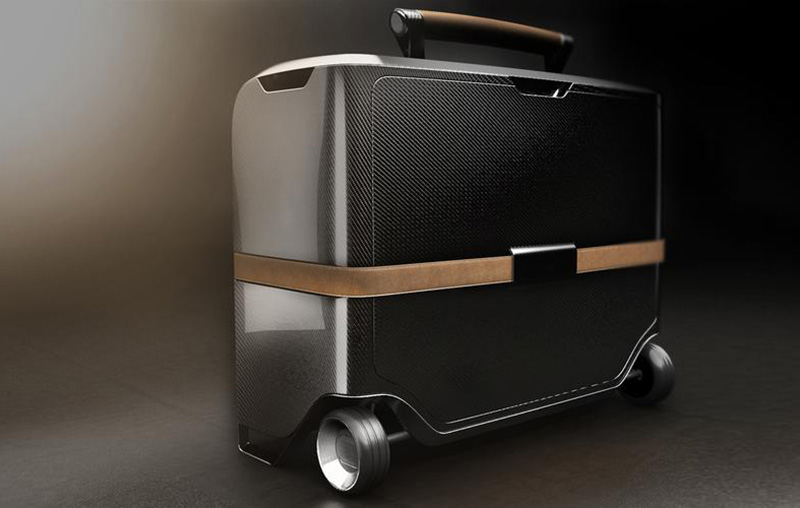 | Luggage & casesLuggage shells, violin cases, and business bag structures |
Other sectorsAerospace, military, wind power, construction, medical equipment, and drone structural parts |  |
FAQ
Yes. Its formability and cost structure make it suitable for volume production. Multiple leading bicycle brands apply this prepreg to their mid-range to high-end frame manufacturing.
Yes. Plain weave with smooth, uniform structure is offered for structural parts such as golf club shafts; twill weave with visible diagonal texture is available for exterior components such as bicycle frames.
T300 grade fiber features 3000MPa tensile strength, suitable for general sports equipment. T700 grade fiber reaches 4900MPa tensile strength, designed for high-performance applications such as professional bicycle frames and racing vehicle components.


