




Description
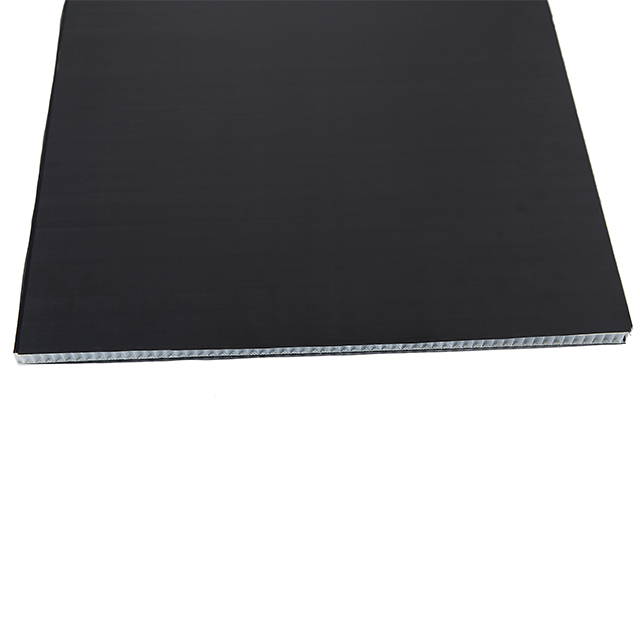
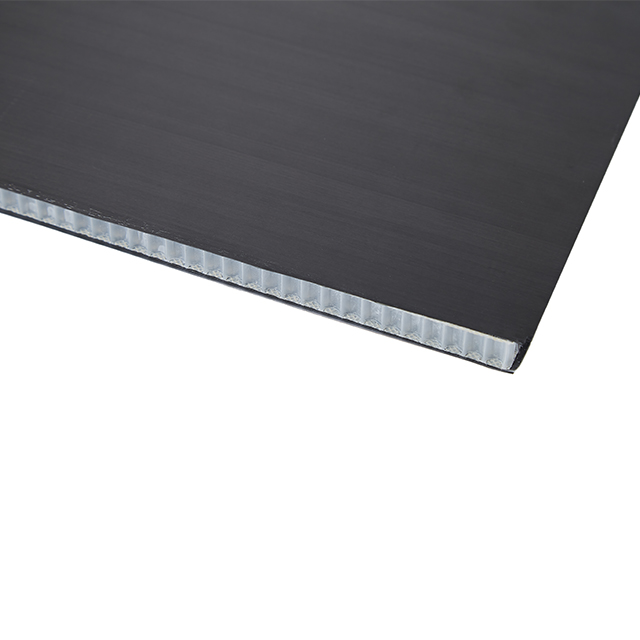
Engineered for demanding industrial environments, the PP Honeycomb Carbon Fiber Board resolves the classic engineering conflict between structural weight and impact resistance. By integrating a tough polypropylene (PP) honeycomb core with rigid carbon fiber skins, this composite panel delivers exceptional load-bearing capabilities while drastically reducing overall mass. As a dedicated manufacturer of advanced composite materials, our factory ensures every panel meets strict dimensional tolerances, providing procurement teams with a reliable, ready-to-machine material for aerospace, automotive, and architectural applications.
The structural synergy of this panel lies in its multi-layered construction. The outer carbon fiber skins provide immense tensile stiffness and flexural strength, effectively distributing concentrated loads across the surface. Meanwhile, the inner PP honeycomb core acts as a lightweight spacer that absorbs kinetic energy and resists compressive forces. This specific configuration prevents the catastrophic brittle failure often seen in solid carbon laminates, offering a superior strength-to-weight ratio that translates directly into fuel savings and payload optimization for transportation sectors.
Beyond mechanical performance, the choice of materials ensures long-term stability across varying environmental conditions. The polypropylene core is inherently resistant to moisture ingress, fungal growth, and chemical degradation, while the carbon fiber surface withstands prolonged exposure to industrial solvents and harsh weather. This inherent durability minimizes the need for frequent replacements or intensive maintenance, significantly lowering the total cost of ownership for large-scale infrastructure projects.
To accommodate diverse engineering requirements, the manufacturing process allows for precise control over panel thickness, core density, and skin orientation. Whether the project demands a highly rigid platform for precision optical equipment or a slightly flexible aerodynamic fairing, the composite structure can be tailored to meet exact specifications. This adaptability makes it an invaluable resource for engineers looking to push the boundaries of modern structural design without compromising on safety or reliability.
Parameter | Specification |
Maximum Size | 9000*3000mm |
Minimum Thickness | >0.2mm |
Core Material Options | PP honeycomb, aluminum honeycomb, aramid honeycomb |
Surface Material | High-quality carbon fiber |
Brand | QINI |
We provide exhaustive laboratory testing documentation for every production batch, detailing compressive strength, interlaminar shear strength, flexural modulus, and thermal tolerance limits. These precise engineering metrics allow procurement officers and structural engineers in aerospace, marine, and automotive sectors to validate the material against their most stringent safety and performance algorithms.
To accommodate both functional and aesthetic requirements, the carbon fiber skins can be customized with classic plain or twill weave patterns. Surface finish options include low-glare matte for tactical applications or high-gloss finishes for consumer-facing luxury goods. Additionally, we apply specialized UV-resistant clear coats to prevent resin yellowing and degradation under prolonged sunlight exposure.
Moving beyond raw material supply, our facility offers comprehensive secondary processing. This includes precision CNC 5-axis routing, edge sealing, pre-drilling for fasteners, and the insertion of hard points for load-bearing attachments. By delivering ready-to-assemble components, we help clients streamline their production lines and reduce in-house machining overhead.
Our manufacturing operations are strictly governed by internationally recognized quality management frameworks, including ISO 9001 and AS9100 standards. Prior to dispatch, panels undergo rigorous non-destructive testing (NDT), such as ultrasonic flaw detection, to ensure zero internal voids or delamination, guaranteeing absolute consistency across large-volume orders.
Transporting oversized composite panels (up to 9000*3000mm) requires specialized logistical planning. We engineer custom, fumigation-free wooden crates reinforced with internal shock-absorbing foam structures. This meticulous packaging strategy isolates the panels from transit vibrations and impact forces, ensuring zero-defect delivery to any global manufacturing hub.
We understand the complexities of industrial sourcing and offer flexible procurement frameworks. This includes transparent Minimum Order Quantities (MOQ), reliable lead times for continuous supply chains, and structured payment terms. Furthermore, our rapid prototyping and sampling service allows engineering teams to physically evaluate the material properties before committing to full-scale production runs.
Integrating honeycomb panels into existing frameworks can present unique connection challenges. Our technical support team provides detailed structural node diagrams, recommendations for compatible structural adhesives, and guidance on selecting the appropriate mechanical fasteners (such as potted inserts). This dedicated engineering support ensures a smooth transition from design concept to physical assembly.
Direct Manufacturer Economics: By controlling the entire composite layup and curing process in-house, we eliminate intermediary markups, providing highly competitive pricing structures for large-scale procurement contracts.
Scalable Production Capacity: Equipped with industrial-scale heated presses and automated resin application systems, our facility can seamlessly pivot from small-batch prototyping to continuous, high-volume manufacturing without extending lead times.
Strict Material Traceability: Every roll of carbon fiber and batch of PP honeycomb is cataloged and tracked. This end-to-end traceability ensures compliance with stringent aerospace and automotive regulatory standards.
Custom Engineering Support: Our in-house materials engineers collaborate directly with your design team to optimize panel thickness, core density, and fiber orientation, ensuring the final product perfectly aligns with your structural load requirements.
Q: What is the standard Minimum Order Quantity (MOQ) for custom panel sizes?
A: While we accommodate large-scale industrial orders, our MOQ is structured flexibly to support pilot projects and prototyping. Please contact our sales engineering team with your specific dimensional requirements to receive an accurate MOQ assessment.
Q: Can the PP honeycomb core thickness be modified for specific structural needs?
A: Yes, the core thickness is entirely customizable. We can adjust the internal honeycomb depth to increase flexural rigidity for floor panels or reduce it for lightweight aerodynamic fairings, depending on your load-bearing parameters.
Q: How do you prevent edge crushing when mechanical fasteners are applied?
A: For applications requiring bolts or rivets, we offer edge sealing and localized hard-point potting services. We inject high-density epoxy compounds into specific cellular zones, creating a solid anchor point that prevents core crushing under compression.
Q: Are these carbon fiber panels suitable for prolonged outdoor exposure?
A: Absolutely. The polypropylene core is impervious to moisture, and we apply specialized UV-inhibiting clear coats to the carbon fiber skins. This prevents resin degradation and maintains structural integrity in harsh exterior environments.
Q: What is the typical lead time for a bulk production run?
A: Standard production cycles for bulk orders typically range from 3 to 5 weeks, depending on the complexity of CNC machining and current factory scheduling. Expedited processing is available for urgent supply chain requirements.
Process Caracteristics
The fabrication of the QINI PP Honeycomb Carbon Fiber Board relies on a highly controlled thermal pressing and adhesive curing methodology. Initially, industrial-grade epoxy resins are applied to bond the woven carbon fiber laminates to the hexagonal polypropylene core. This assembly is then transferred into a vacuum-sealed autoclave or a heated press, where precise temperature and pressure profiles are maintained. This critical curing phase ensures the resin deeply penetrates the fiber matrix and forms a permanent mechanical lock with the porous surface of the honeycomb cells.
By strictly monitoring the thermal expansion rates of both the core and the skin materials during the cooling cycle, our production facility eliminates internal residual stresses. This attention to thermodynamic behavior prevents the warping, bowing, or delamination issues that plague inferior composite panels. The resulting board exhibits remarkable flatness and structural integrity, arriving at your assembly line ready for immediate integration without the need for secondary flattening or corrective machining.
Application Area
| >> AerospaceUsed to manufacture structural parts and interior components of aircraft, rockets, and satellites. The panel’s lightweight design reduces overall vehicle weight, improving fuel efficiency and launch payload capacity. |
>> AutomobileApplied in car bodies, bumpers, and interior trims. By replacing traditional metal parts, the panel cuts vehicle weight by up to 30%, boosting fuel economy and collision safety. |
|
| >> Sports EquipmentIdeal for producing high-performance bicycles, skis, and surfboards. The panel’s strength and durability enhance equipment performance while keeping it lightweight for athletes. |
>> ConstructionServes as sound insulation, thermal insulation, and decorative materials. The panel’s corrosion resistance and insulation properties make it suitable for both indoor and outdoor building projects. |
|
Advantages
The geometric efficiency of the hexagonal honeycomb structure combined with the tensile dominance of carbon fiber yields a panel that supports massive static and dynamic loads. By drastically lowering the mass of structural components, engineers can reallocate weight budgets to other critical systems, such as larger battery packs in EVs or additional sensor arrays in aerospace applications, without sacrificing structural safety.
The cellular nature of the polypropylene core traps thousands of individual air pockets, establishing an effective thermal break and acoustic dampening layer. This intrinsic property reduces the transmission of mechanical vibrations and engine noise into passenger cabins, while simultaneously preventing thermal bridging in temperature-controlled environments, eliminating the need for secondary insulation materials.
Unlike aluminum or steel alternatives that require constant protective coatings, the carbon-PP matrix is chemically inert. It withstands prolonged exposure to industrial lubricants, saline humidity, and acidic atmospheric conditions without oxidizing or degrading. This resilience guarantees consistent mechanical performance over the product's lifespan, protecting your investment from environmentally induced failures.
Despite its immense strength, the board is highly machinable using standard CNC routing equipment. Clean edges can be achieved without excessive tool wear, and the panels readily accept mechanical fasteners, edge potting, and adhesive bonding. Our factory can adjust the skin thickness, core density, and overall dimensions up to 9000*3000mm, ensuring the material integrates flawlessly into your specific manufacturing workflow.


