
Views: 0 Author: Site Editor Publish Time: 2025-08-05 Origin: Site


 Carbon fiber fabric has changed how cars and planes are made. It makes them lighter, stronger, and better at saving energy. New materials have always helped these industries. People used wood and steel before. Then they used aluminum. Now, they use advanced carbon fiber fabrics. The newest market data shows people are using it more. The industry was worth $2.3 billion in 2023. It may grow to $4.9 billion by 2032.
| Aspect | Details |
|---|---|
| Largest Consumer Sector | Aerospace & Defense |
| Key Benefits | High strength, light weight, durability |
Switching to carbon fiber fabric helps save fuel. It also makes things safer and lets designers be more creative.
Carbon fiber fabric is strong and light. It helps make cars and planes safer. It also helps them use less fuel.
Engineers can make new shapes and parts with it. Metals cannot do this. This makes things work better and look cooler.
Big companies like Boeing and BMW use carbon fiber. They put it in important parts. This makes vehicles lighter and stronger.
Carbon fiber fabric helps the planet. It lowers fuel use. It also lets people recycle materials.
New technology is making carbon fiber fabric better. More people want it. Soon, it will be in more everyday vehicles.
Carbon fiber fabric is a new material used in cars and planes. It is made by weaving carbon filaments into a fabric. Then, a polymer resin holds the fabric together. This makes a composite that is lighter and stiffer than steel or aluminum. Metals have the same structure all over. Carbon fiber fabric has a composite structure instead. This gives it more strength for its weight and makes it stiffer. Carbon fiber cloth does not bend like aluminum. It keeps its shape unless a very strong force breaks it. These features make it great for parts that need to be light and exact.
Carbon fiber fabrics have special physical and mechanical properties. The table below shows how they compare:
| Material | Elastic Modulus (msi) | Density (lbs./in³) | Stiffness-to-Weight Ratio (×10⁶) |
|---|---|---|---|
| Plain-Weave Carbon Fiber Composite | 8 | 0.05 | 160 |
| 6061-T6 Aluminum | 10 | 0.10 | 100 |
| Steel | 30 | 0.30 | 100 |
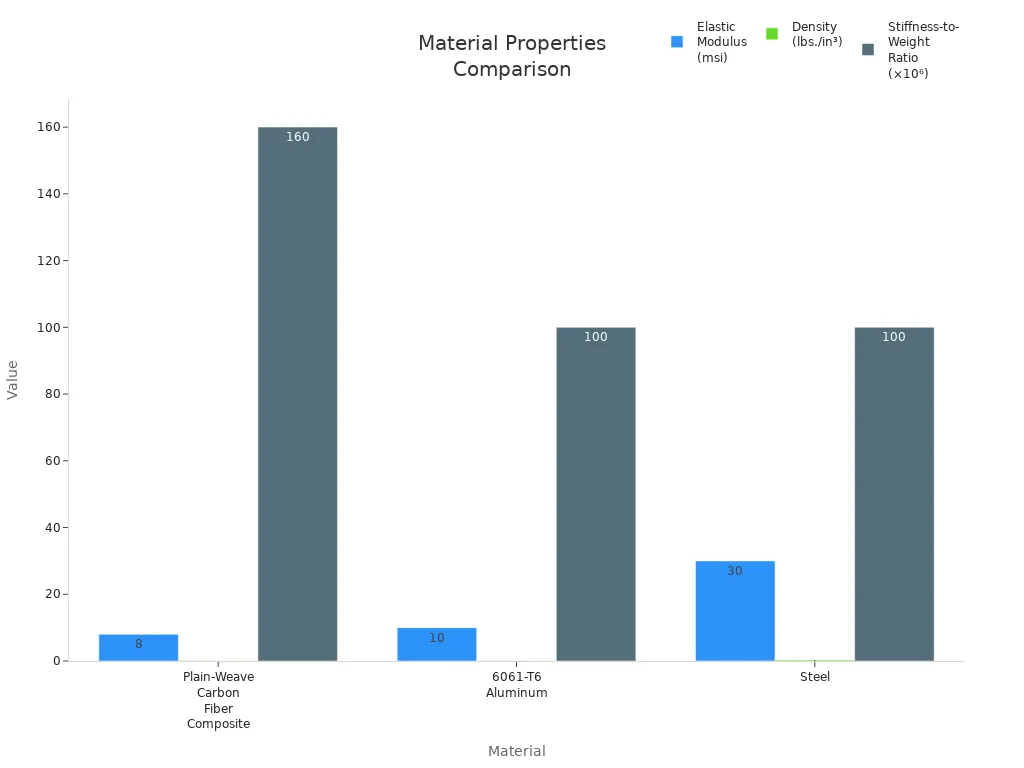
Woven carbon fiber fabrics are strong and light. They keep their shape well. They do not vibrate much and last a long time. They work well even when things move a lot. Carbon fiber composites do not change shape much with heat. This helps them stay the same size when it gets hot or cold. Changing the surface of carbon fibers can make them even stronger. This helps them work better in carbon fabric-reinforced polymer composites.
Making woven carbon fiber fabrics takes many steps. Producers start with polyacrylonitrile (PAN) fibers. They treat and heat these fibers to make them strong. Next, they weave the fibers into patterns like plain, twill, or satin. Each pattern changes how flexible and strong the fabric is. Plain woven carbon fiber is very stable. Twill woven carbon fiber bends better for tricky shapes. Tow sizes like 3k, 6k, or 12k show how many filaments are in each bundle. Small tow sizes make the fabric lighter and more flexible. Big tow sizes make it stronger and tougher.
Manufacturers use ways like wet layup, vacuum infusion, and hot press to make carbon fiber composites. The resin and the way the fabric is laid out change the quality and price. Companies like Toray Industries, Hexcel, and SGL Carbon make top-quality woven carbon fiber fabrics. They use new ideas and technology to make sure their products are always good. This helps the aerospace and automotive industries get strong and reliable carbon fiber reinforcement.
Woven carbon fiber fabrics have fibers that cross each other in two ways. This makes the fabric strong and bendy in more than one direction. There are different patterns like plain, twill, and satin. Each pattern changes how the fabric acts. Plain woven carbon fiber is very steady and keeps its shape. Twill woven carbon fiber bends more and has a slanted look. Satin woven carbon fiber is shiny and smooth. It also fits around tricky shapes. People use woven carbon fiber fabrics for flat panels, car parts, and airplane pieces. These parts need to be strong and steady. The way the fabric is woven helps spread out force. This makes it good for many jobs.
Tip: Woven carbon fiber fabrics are picked for their strength and nice look.
| Weave Pattern | Mechanical Properties | Flexibility | Stability | Typical Applications |
|---|---|---|---|---|
| Plain | High strength, more crimp | Moderate | High | Flat panels, aerospace, automotive |
| Twill | Good strength, less crimp | Better | Moderate | Molded parts, sports equipment |
| Satin | High strength-to-weight | Excellent | Lower | Luxury auto, complex aerospace |
Unidirectional carbon fiber fabric has all its fibers going one way. This makes it very strong and stiff in that direction. There are no fibers crossing each other. So, it can hold a lot of weight from one side. These fabrics are light and do not get hurt by water, chemicals, or heat. People use unidirectional carbon fiber fabric to make bridges, buildings, and tunnels stronger. It is also used in cars and planes that need to be strong in one way. The way it is made helps it last a long time and stay tough.
Unidirectional fabrics are special because they put strength where it is needed most. Engineers use them to make things stronger without making them heavier. This is why unidirectional fabrics are great for high-performance designs.
Forged carbon fiber fabrics use small pieces of carbon fiber mixed with resin. They are pressed into shapes. This gives them a special look and lets them fit into hard shapes. Forged carbon fiber fabrics do not have a woven or one-way pattern. The fibers go in many directions. This makes the material strong from all sides. Specialty carbon fiber fabrics can have mixed patterns or be made for special jobs. People use these fabrics in fancy car parts, sports gear, and expensive products. Forged and specialty fabrics help designers mix strength, style, and flexibility.

Aerospace engineers like carbon fiber fabric because it is light and strong. Planes made with carbon fiber fabric can be up to 20% lighter than those made with aluminum. Lighter planes can carry more people or cargo without using more fuel. Carbon fiber composite parts are stronger for their weight than metals. Carbon fiber is about 40% lighter and stronger than aluminum. Both passenger and military planes use these benefits. The Boeing 787 Dreamliner uses about half its weight in composite materials, mostly carbon fiber. This makes the plane lighter and helps it fly better.
When a plane is lighter, it uses less fuel. This saves money and helps the environment. Carbon fiber composites take the place of heavy metals. This makes planes lighter and stronger. Airlines can follow strict environmental rules more easily. Companies like Toray Industries and Hexcel Corporation make new carbon fiber composites for future planes. These materials help save fuel and lower costs. The Boeing 787 Dreamliner uses carbon fiber composite parts in its wings and body. This design helps the plane use less fuel and need less fixing.
| Aspect | Explanation | Supporting Example |
|---|---|---|
| Weight Reduction | Carbon fiber is lighter than metals, reducing aircraft mass and fuel use. | Boeing 787 Dreamliner uses 50% composites by weight. |
| Aerodynamic Performance | Carbon fiber allows complex shapes, reducing drag and saving fuel. | Swept wing designs cut fuel use by up to 5%. |
| Manufacturing Efficiency | Fewer parts are needed, lowering production time and cost. | Airbus A380 uses composites to reduce part count. |
| Durability and Maintenance | Carbon fiber resists corrosion and fatigue, lowering maintenance needs. | Boeing reports less maintenance for composite structures. |
Many planes now use carbon fiber fabric to save fuel. This includes passenger jets, military planes, and electric planes. Using carbon fiber composites also helps lower pollution and keeps the air cleaner.
Safety is very important in making planes. Carbon fiber fabric helps keep planes safe in crashes and makes them stronger. Studies show that mixing carbon fiber with other fibers like Kevlar and glass can help absorb more crash energy. Kevlar fibers help stop cracks from spreading. This keeps the plane together in an accident. Using different fibers and stacking them in layers makes the plane tough but not too brittle. This helps the plane take more force and stay safer in a crash. Engineers use this information to make safer plane parts.
Tests show that when carbon fiber is mixed with Kevlar, it keeps its shape better under pressure. This means the plane can handle more force without breaking. These safety features make carbon fiber fabric a trusted choice in new plane designs.
Carbon fiber fabric lets engineers make new shapes and parts for planes. Its light weight and strength help them design things that metals cannot. Carbon fiber does not rust and can handle stress over and over. This makes it great for tough jobs in planes. The Boeing 787 Dreamliner is a good example. It uses about half its weight in composite materials, including carbon fiber. This makes it 20% lighter. The lighter weight helps the plane use less fuel and make less pollution.
Engineers use carbon fiber fabric in many plane parts, like wings, body panels, and engine parts. Its high strength-to-weight ratio and toughness help make planes lighter, stronger, and better. The Space Shuttle also used carbon fiber composites in its heat shields and body to survive very high temperatures. These examples show how carbon fiber fabric helps make better and safer planes.
Note: Carbon fiber fabric helps make planes lighter, safer, and more efficient. It is strong, tough, and lets engineers design new shapes. Real planes like the Boeing 787 Dreamliner and the Space Shuttle show how useful it is in modern aerospace engineering.
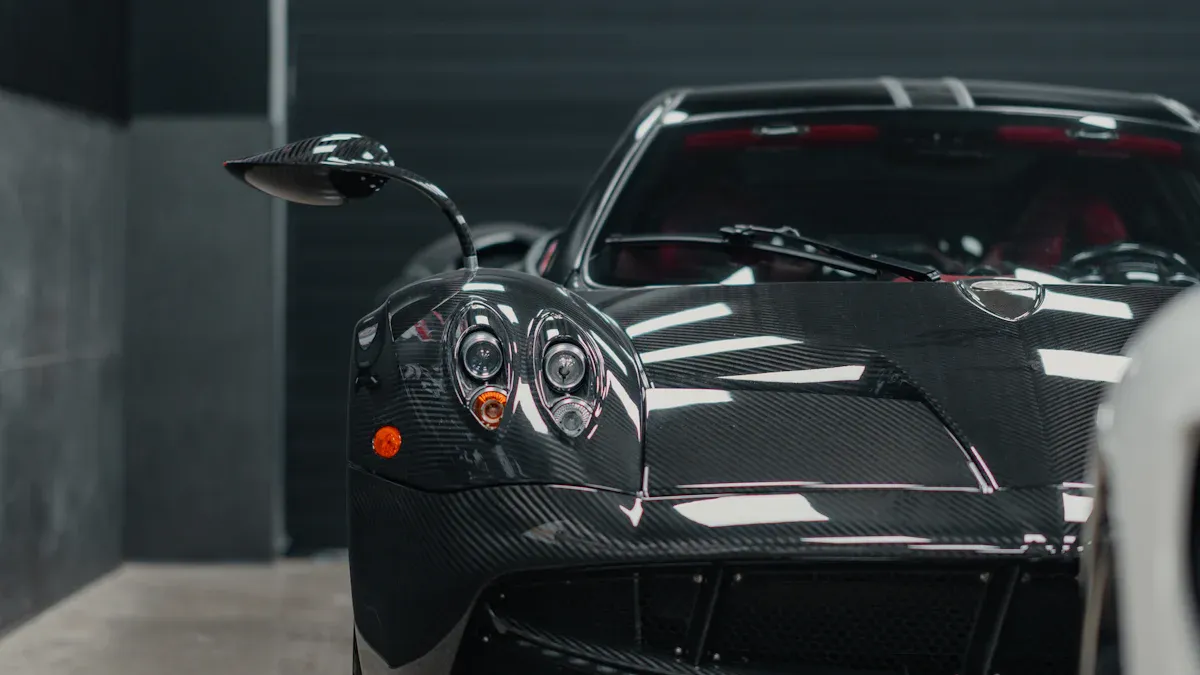
Carbon fiber fabric helps cars go faster and handle better. It is light and strong, so cars can speed up quickly. Many car makers use carbon fiber parts to make cars lighter. Lighter cars turn better and use less fuel.
Carbon fiber wheels make rides smoother and help cars turn fast.
Chassis and body panels made from composites are stiff and last long.
Sports cars like McLaren, Ferrari, Porsche, and Ford use carbon fiber. These cars start, stop, and turn better.
Carbon fiber reinforced plastic is stiff and does not wear out fast. Cars with these parts are lighter and stronger than cars with steel or aluminum.
BMW uses carbon fiber in the i3 and i8. These cars show that composites work in electric and fast cars.
Using carbon fiber in bumpers, engine cradles, and roofs makes cars lighter and stronger. Replacing steel with carbon fiber reinforced plastic can cut car weight by 60%. This makes cars work better and use less fuel.
Safety is very important when making cars. Carbon fiber fabric helps keep people safe in crashes. It is strong and light, so car bodies can be tough but not heavy. These bodies spread out crash energy to protect people.
Carbon fiber breaks in a way that slows down crashes. This helps keep people safe.
Engineers use composites to make crumple zones and safety cells. These parts protect people in front and side crashes.
Crash tests show carbon fiber spreads out crash forces better than steel or aluminum.
Carbon fiber is stiff, so it helps airbags and seat belts work well.
Carbon fiber soaks up crash energy and slows down the car. This helps stop injuries.
Carbon fiber composites let designers add new safety features. These changes help make cars safer for everyone.
Carbon fiber fabric helps make cars better for the planet. Cars made with composites are lighter than steel cars. Lighter cars use less gas and make less pollution. This helps the earth.
Carbon fiber composites are much lighter than steel. Cars can be light and still strong.
New carbon fiber materials use less energy and make less CO2.
Carbon fiber composites can be recycled. This means less waste from making cars.
Carbon fiber does not rust, so cars last longer. Cars need fewer repairs, which is good for the planet.
Making carbon fiber uses less energy and makes less pollution than making steel.
Note: Carbon fiber fabric helps cars go faster and keeps people safe. It also helps the planet by making cars lighter and cleaner to build.
Car designers use carbon fiber fabric to make cool new shapes. The material bends easily, so cars can look different and work better. Many fancy and fast cars use carbon fiber for style and speed.
The BMW i3 has a carbon fiber passenger cell. This makes it light and safe.
The BMW i8 uses carbon fiber in many parts. This helps the car stay light and look good.
BMW M Performance cars have carbon fiber roofs and spoilers. These parts look cool and make the car stiff.
The BMW 7 Series uses carbon fiber in its body. This makes the car lighter and easier to drive.
Fast motorcycles like the BMW HP4 RACE use carbon fiber frames and wheels. This helps them go fast and turn quickly.
Tesla and Audi use carbon fiber in electric cars. This protects batteries and helps cars use less energy.
Designers use 3K carbon fiber fabric inside cars. They mix it with leather for a fancy look. New tools like 3D printing help make custom parts and cool lights. These ideas make cars look better and work better.
Tip: Carbon fiber fabric lets car makers build cars that are light, safe, and cool. It also helps them try new styles and technology.
Engineers are finding new ways to use carbon fiber fabric. Now, 3D printing with continuous carbon fiber can make strong, light parts. This works by mixing carbon fiber strands with thermoplastic bases. The process uses things like polyacrylonitrile, pitch, or rayon to make fibers. These fibers are very stiff and strong. New ideas in fiber sizing and resin systems make carbon fiber composites last longer. They also help them stand up to weather and other tough conditions. Better recycling methods, like pyrolysis and chemical processes, help get carbon fiber back from old products. These recycled fibers cost less and help the planet. Automated fiber placement and resin transfer molding make it easier to shape carbon fiber. This helps people make tricky parts for planes, cars, and sports gear.
More industries are starting to use carbon fiber fabric. Wind energy companies use woven carbon fiber to make wind turbine blades. These blades are longer, lighter, and last longer. They also do not need much fixing. Builders use woven carbon fiber to make concrete and other structures stronger. In Asia-Pacific, especially China and Japan, more people want woven carbon fiber. They use it in cars, buildings, and wind energy. The Middle East and Africa are also using more carbon fiber. This is because they are building more things and using more clean energy. In sports, woven carbon fiber is in bikes, tennis rackets, and other gear. This makes them lighter and stronger.
Carbon fiber fabric has some problems. It costs a lot to make because the process is hard and materials are pricey. This makes it tough to use in regular cars and planes. Recycling is also hard. It is tricky to take fibers out of resin without making them weak. The supply chain depends on a few countries for the main materials. This can cause shortages. Companies are trying new ideas like bio-based materials and ways to save energy when making carbon fiber. They are also working on better recycling. Building more recycling centers and making products easier to take apart will help. This will make carbon fiber better for the future and for more uses.
Carbon fiber fabric is changing how cars and planes are made.
It is very strong for its weight and does not rust. It also lasts a long time. This helps make cars and planes lighter, safer, and better at saving energy.
Big companies use carbon fiber in important parts. The Boeing 787 Dreamliner and BMW’s i3 and i8 are good examples.
Experts think carbon fiber will be used in more everyday cars soon. This is because people want to help the planet and new ways to make it are being found.
As new ideas come faster, carbon fiber fabric will stay important for making fast, safe, and green vehicles.
Carbon fiber fabric is lighter than metal. It is also stronger and stiffer. This helps cars and planes go faster. They also use less fuel. Engineers like carbon fiber because it lasts a long time. It does not rust or break down easily.
Yes, companies can recycle carbon fiber fabric now. They use new ways to get fibers from old parts. These fibers are used again in new things. Recycling helps make less trash. It also helps protect the earth.
Engineers put carbon fiber fabric in many places. In cars, it is in the body, roof, and wheels. In planes, it makes wings, body parts, and inside panels stronger.
Tip: Carbon fiber fabric makes cars and planes safer and work better.
Carbon fiber fabric makes vehicles lighter. Lighter cars and planes need less energy to move. This means they use less fuel and make less pollution. Airlines and car makers use carbon fiber to help the environment.


