
Views: 0 Author: Site Editor Publish Time: 2025-08-07 Origin: Site


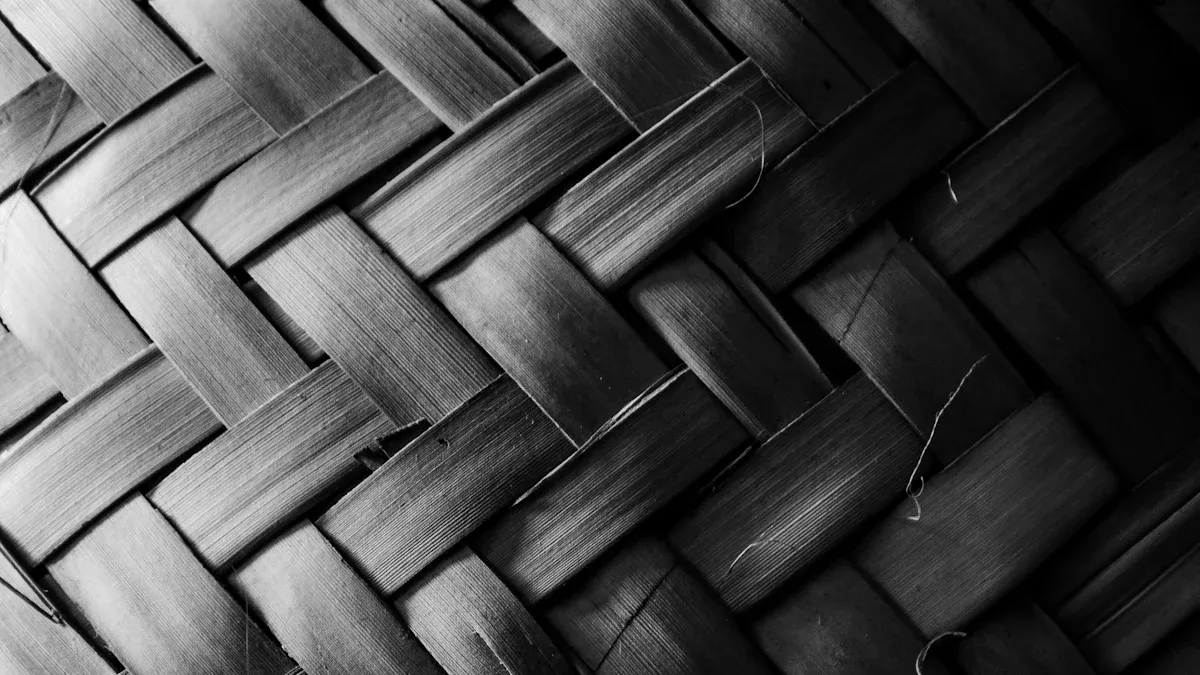 You learn what makes carbon fiber fabric special at the atomic level. Carbon atoms connect in sheets like graphite. These sheets line up next to each other. This creates fibers that are strong and light. This atomic setup gives carbon fiber fabrics a great strength-to-volume ratio. How you place these fibers and pick weave patterns also changes how the fabric works.
More people want carbon fiber fabrics now, especially in planes and cars:
| Industry Usage Shares | Data |
|---|---|
| Aerospace | About 45% of all use |
| Automotive (mainly EVs) | Over 1,900 metric tons |
| Construction, Sports, Defense | Large shares |
Carbon fiber fabric is strong and light. This is because carbon atoms connect in sheets and fibers. This gives it a high strength-to-weight ratio.
Different weave patterns like plain, twill, and satin change the fabric’s strength. They also change how flexible it is and how it looks. This helps the fabric fit different project needs.
There are three main types of carbon fiber fabrics. Unidirectional fabric is strong in one direction. Woven fabric is strong in many directions. Non-woven fabric is strong everywhere.
Carbon fiber fabric is much stronger and lighter than metals like aluminum. This makes it great for planes, cars, sports gear, and building things.
Using carbon fiber fabric helps make parts that last longer. These parts resist heat and corrosion. They also work better and weigh less.
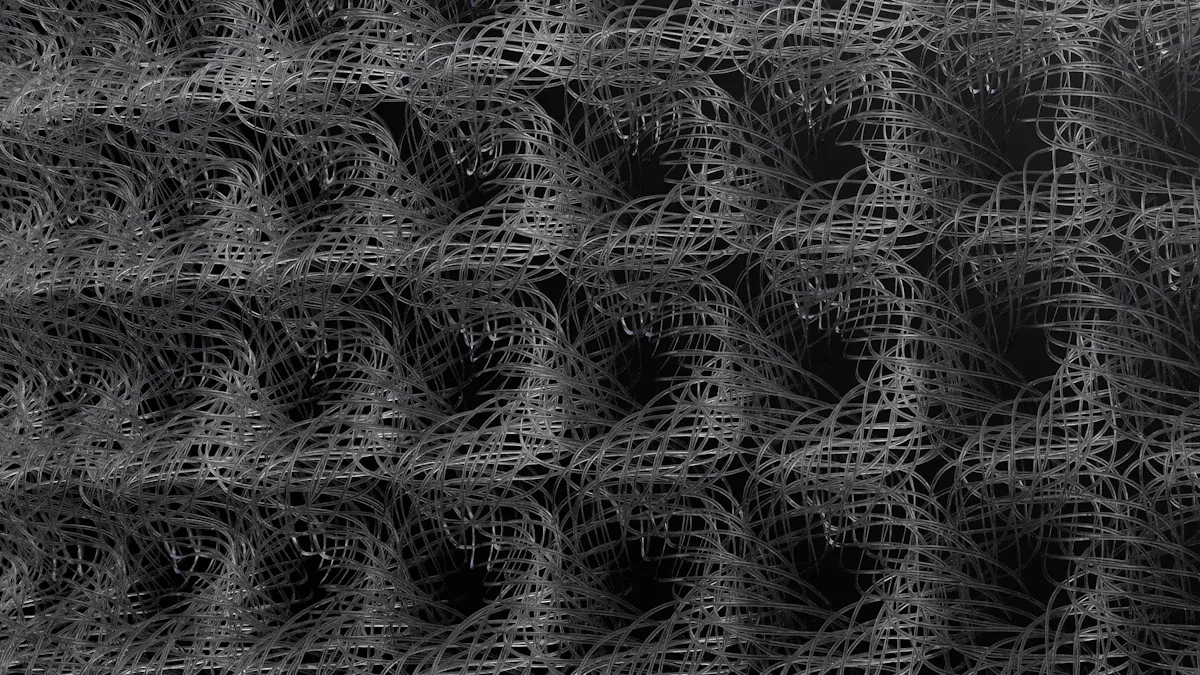
To see why carbon fiber fabric is so strong, look at its tiny parts. Each fiber starts with carbon atoms in a special order. These atoms make sheets called graphitic crystals. The sheets line up along the fiber. The fibers get heated to very high temperatures with no oxygen. This step takes away other atoms. It lets the carbon atoms stick together tightly. The strong covalent bonds make the fiber stiff and hard to pull apart.
How the crystals line up is important. If they are lined up well, the fiber is stiffer and stronger along its length. The bonds help stop the fiber from stretching or breaking. But the fiber is weaker across its width. The layers only stick together with weak forces. The starting material, like PAN or pitch, and the heat used, change the final strength. PAN-based fibers are often stronger because their crystals are smaller. Small crystals break less at weak spots. Even tiny changes, like adding nitrogen, can make the fiber stronger and more bendy.
When you see woven carbon fiber, you notice more than just black fabric. The way the fibers cross each other is called the weave pattern. This pattern changes how the fabric looks and works. There are a few common patterns. Each one has its own good points.
Plain Weave: This pattern looks like a checkerboard. Each fiber goes over and under the next. The fabric is stable and tough but not very bendy. Plain weave is good for flat or simple shapes.
Twill Weave: In this pattern, fibers go over two and under two. This makes a diagonal look. The fabric bends more and wraps around curves better. Twill weave also looks cool, so it is used in cars and sports gear.
Satin Weave: Here, fibers go over many others before going under. This makes a smooth, shiny surface. Satin weave bends and wraps around tricky shapes well. It is used in planes and fancy products.
Tip: The weave pattern you pick changes the strength and look of your carbon fiber. Plain weave is best for stability. Twill is best for bending. Satin is best for smoothness and wrapping.
| Weave Pattern | Mechanical Performance | Appearance | Key Characteristics |
|---|---|---|---|
| Plain Weave | Very stable and tough; more fiber crimp makes it a bit weaker; good for flat shapes | Checkerboard look | Simple over-under style; most stable; not costly; bends okay |
| Twill Weave | More bendy and takes hits better; less crimp than plain; good mix of strength and shape | Diagonal lines | Over two, under two style; bends well; cool diagonal look |
| Satin Weave | Bends and wraps best; can be stronger in some ways; less stable | Smooth, shiny look | Long floats; smooth finish; harder to use; less stable |
Tow size tells you how many tiny threads are in one strand of woven carbon fiber. You see numbers like 3K, 6K, or 12K. "K" means a thousand threads. So, 3K has 3,000 threads in one tow.
3K Tow: This makes a thin, light fabric. It bends well and is strong for its weight. It is great for projects where you want a smooth look, like car parts or sports gear.
6K Tow: This size is a mix of strength and bending. It is easier to use than bigger tows. It works well in planes or buildings.
12K Tow: This makes a thick, stiff fabric. It is very strong but does not bend much. It is best for big things or places that need extra strength, like robots or military gear.
| Tow Size | Number of Filaments | Strength & Flexibility | Fabric Characteristics | Typical Applications | Cost & Other Notes |
|---|---|---|---|---|---|
| 3K | 3,000 | Stretches more and is stronger than bigger tows; bends more | Makes thin, light fabric; easy to use | Planes, sports gear, buildings, factories | Most used; stiff and light |
| 6K | 6,000 | Medium strength; bends better and soaks up glue better than 12K | Smoother to use; bends better than 12K | Planes, building support, car upgrades | Good mix of strength and use |
| 12K | 12,000 | Stronger but bends less | Makes big, stiff, heavy fabric | Military, robots, strong building parts | Cheaper; saves money; makes tough fabric |
Remember, tow size and weave pattern work together. A small tow with plain weave makes a fine, stable fabric. A big tow with satin weave makes a thick, bendy fabric for tough jobs. Pick what fits your project best.
There are three main types of carbon fiber fabrics. These are unidirectional, woven, and non-woven. Each type has its own structure and special features. Knowing how each type acts under stress helps you pick the right one.
Unidirectional carbon fiber fabrics have fibers going in one main direction. Most fibers run side by side along the fabric’s length. Only a few thin threads hold them together across the width. This makes the fabric very strong and stiff in one direction. You use these when you need the most strength in one way, like for airplane wings or bridges.
Unidirectional carbon fiber fabrics do not bend well over tricky shapes. If you try to bend them too much, they can wrinkle or leave spaces. But you can stack them at different angles to make strong parts for many directions. The straight fibers do not bend much, so they are hard to stretch or break. When you pull the fabric along the fiber direction, it is very stiff and strong. The strength depends on how many fibers you use and how straight they are.
Tip: Use unidirectional carbon fiber fabrics for the most strength in one direction, like beams or panels.
| Characteristic | Description |
|---|---|
| Fiber Alignment | Fibers mostly go in one direction, with a few cross threads. |
| Strength & Durability | Twice as strong as woven carbon fiber in the fiber direction. |
| Structure | Non-woven, made by hand, with parallel fibers. |
| Strength-to-Weight Ratio | Very high, great for light, strong parts. |
| Drapability | Not good for tricky shapes. |
| Manufacturability | Easy to use, but stacking needs care. |
| Applications | Used in bridges, tall buildings, planes, and sports. |
| Additional Properties | Handles heat well and is tough. |
Big companies like Toray and Hexcel make these fabrics for planes and cars. They use smart machines and computers to line up the fibers just right. This helps you get the best results.
Woven carbon fiber fabrics have fibers that cross each other. Some go up and down, and some go side to side. The fabric can look like a checkerboard or have slanted lines. This gives the fabric strength in both directions. You use woven carbon fiber for parts that need to handle force from many ways.
The way you weave the fibers changes how the fabric acts. A plain weave makes a stable fabric that keeps its shape. A twill or satin weave bends more and wraps around curves. Woven carbon fiber fabrics have some crimp, which means the fibers bend a little as they cross. This makes them less strong than unidirectional carbon fiber, but easier to use and shape.
| Fabric Type | Fiber Orientation | Strength Characteristics | Drapability & Manufacturability | Additional Notes |
|---|---|---|---|---|
| Woven Carbon Fiber | Fibers cross in two directions (up-down and side-side) | Strong in more than one direction | Bends well; fits tricky shapes; easy to use | Comes in different weaves (plain, twill, satin). Used in planes, cars, sports, and boats. |
Woven carbon fiber fabrics are good for car parts, bike frames, and plane panels. They fit around tricky shapes without leaving gaps. Companies like Hexcel and Toray make new weaves and use green ways to make these fabrics better. This helps you get strong, light, and bendy parts.
Note: Woven carbon fiber fabrics give you a good mix of strength, bending, and easy use. Pick the weave that works for you.
Non-woven carbon fiber fabrics have fibers spread out in random ways. Resin or glue holds them together. There is no weaving or clear pattern. This fabric is strong in every direction, which is called isotropic strength. You use non-woven carbon fiber fabrics when you want even strength everywhere.
| Fabric Type | Fiber Orientation | Strength Characteristics | Drapability & Manufacturability | Additional Notes |
|---|---|---|---|---|
| Non-Woven Carbon Fiber | Fibers spread out randomly and held by resin or glue | Same strength in all directions | Does not bend well; made by laying or blasting fibers | Not as easy to predict. Used for even strength or with other materials. |
You might use non-woven carbon fiber fabrics for even support, like in sports gear or as a layer in a part. These fabrics do not bend as well as woven carbon fiber, but they are easy to make and can be mixed with other stuff for special uses.
Companies like Toray and Hexcel keep making non-woven carbon fiber fabrics better. They use new ways like chopped fiber tech and green resins. This helps you get better results and helps the planet.
Tip: Pick non-woven carbon fiber fabrics for even strength everywhere or when mixing with other materials.
How you arrange the fibers changes how the fabric works. Unidirectional carbon fiber fabrics are strongest in one direction. Woven carbon fiber fabrics are strong in more than one way and fit shapes better. Non-woven carbon fiber fabrics are strong everywhere but are less predictable.
Unidirectional carbon fiber fabrics do not stretch or break easily in the fiber direction. Use them for beams, tubes, and panels.
Woven carbon fiber fabrics handle force from many ways. Use them for parts with curves or joints.
Non-woven carbon fiber fabrics give even support. Use them for layers or special shapes.
Top companies like Toray and Hexcel lead in making all these types. They use smart machines, green power, and new ideas to help you get the best results.
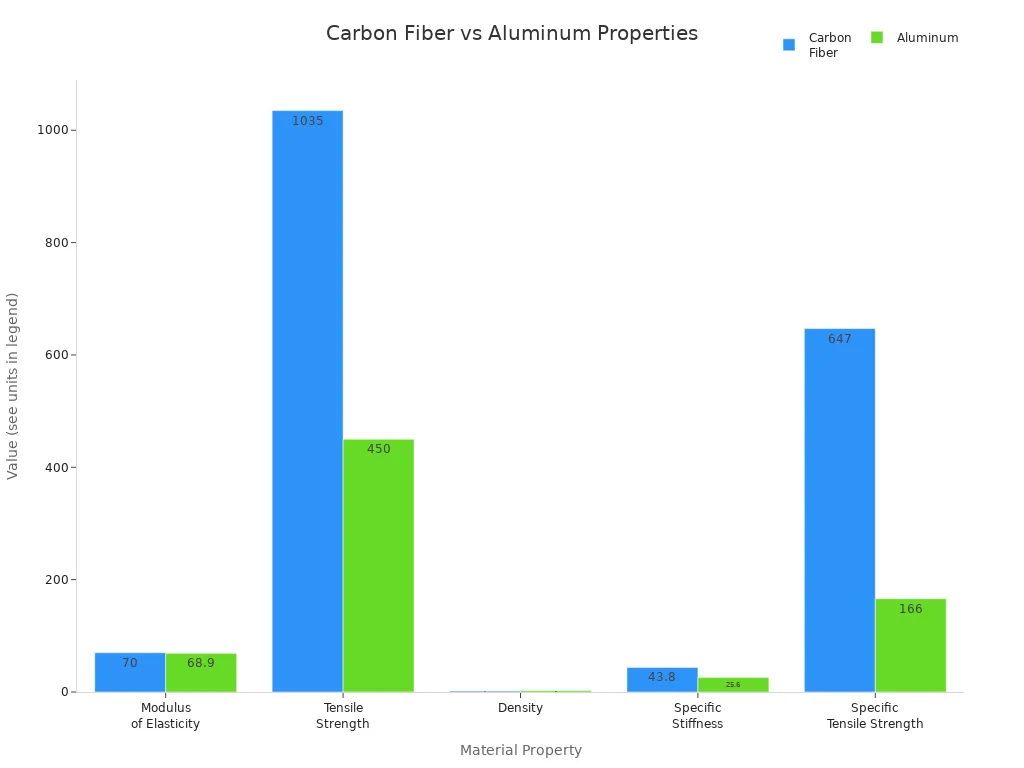
Carbon fiber fabrics are known for being strong and light. When you look at metals like aluminum and steel, carbon fiber is much stronger for its weight. Carbon fiber composites can be pulled very hard before breaking, up to 6,000 MPa. Aluminum alloys break at much lower forces, usually under 700 MPa. Stiffness, which means how hard it is to bend, is also higher in carbon fiber. The modulus of elasticity for carbon fiber can reach 294 GPa. Aluminum only goes up to about 79 GPa. This means carbon fiber is much stiffer and stronger for every pound.
| Property | Carbon Fiber | Aluminum | Carbon/Aluminum Ratio |
|---|---|---|---|
| Modulus of Elasticity (GPa) | 70–294 | 69–79 | up to ~4 |
| Tensile Strength (MPa) | up to 6,000 | up to 700 | up to ~8.5 |
| Density (g/cm³) | 1.6 | 2.7 | ~0.59 |
| Specific Stiffness (E/ρ) | 43.8 | 25.6 | ~1.71 |
| Specific Tensile Strength (σ/ρ) | 647 | 166 | ~3.9 |
Because carbon fiber is strong and light, it is great for planes, cars, and sports gear. The high strength-to-weight ratio lets you make parts that are stiff and do not bend easily. These parts also weigh less than metal ones. This helps save fuel and makes things easier to move.
Carbon fiber fabrics keep their strength even in tough places. Carbon fiber does not rust and can handle most chemicals. In carbon fabric-reinforced polymer composites, the fibers stay strong up to 300 °C. They keep over 80% of their strength after two hours at this heat. The resin that holds the fibers can limit how hot the part can get. Some special resins or carbon matrices let the part handle even more heat.
Note: Carbon fiber fabrics do not rust, so you can use them in wet or salty places. They also resist most acids and bases, but strong oxidizers can cause damage.
If carbon fiber touches some metals, it can cause a reaction called galvanic corrosion. You can stop this by adding a coating. Carbon fiber fabrics last a long time, even in rough outdoor or factory settings.
Carbon fiber fabrics are easy to shape into strong parts. First, you soak the fabric with resin to stick the fibers together. For big bundles of fibers, you might need a solvent to help the resin reach all the threads. This step is important for making the part strong and light.
Here is a simple process for making carbon fiber composites:
Choose the right carbon fiber for your project.
Soak the fabric with resin using wet or hot melt ways.
Partially cure the resin so it is easy to handle.
Cut and lay the layers in the right direction.
Use heat and pressure to cure the part and remove air bubbles.
Trim and finish the part.
You end up with parts that are strong and light. Making these parts can be tricky and needs skilled workers and special tools. The materials and steps cost more than other materials. But the strength, low weight, and long life often make carbon fiber the best choice for high-performance uses.
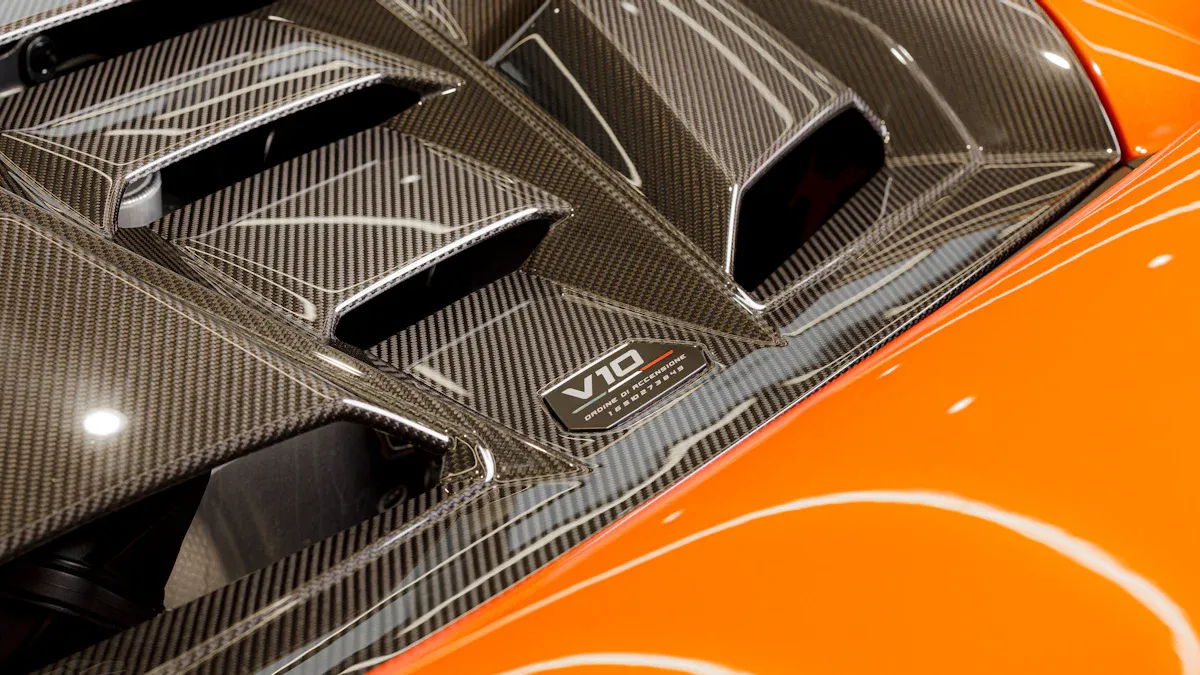
Carbon fiber fabric is used in many industries because it is special. You can find it in planes, cars, buildings, and sports gear. Each area uses the fabric’s strength, light weight, and flexibility in its own way.
Carbon fiber fabric is common in airplanes. Makers use it for wings, body panels, and tails. The fabric is strong and light, so planes can fly farther and use less fuel. Carbon fiber is about 40% lighter than aluminum. This makes planes weigh less and cost less to run. The smooth fabric helps air move over the plane better. This means less drag and more fuel saved. The fabric does not rust, so plane parts last longer.
In cars, carbon fiber fabric is used for body panels, frames, and battery covers. These parts make cars, especially electric ones, lighter. Lighter cars speed up faster and use less fuel. The fabric also makes cars safer by making them stronger. The special weave pattern gives fancy cars a cool look.
Tip: Using carbon fiber fabric in planes and cars makes them work better, safer, and look nicer. It also helps lower the weight.
Builders use carbon fiber fabric to make buildings and bridges stronger. The fabric comes as rods, grids, and panels. These forms help beams, floors, and columns hold more weight without getting heavier. You can make things stronger and safer fast.
| Carbon Fiber Form | Use in Construction and Structural Benefits |
|---|---|
| Carbon Fiber Reinforced Concrete (CFRC) | Makes concrete last longer and replaces asbestos. |
| CFRP Rods | Adds strength but keeps things light. |
| CFRP Grids | Makes panels stronger, lighter, and resists chemicals. |
| CFRP Panels | Replaces steel mesh and cuts panel weight by 40%. |
| FRP Laminate Bonding | Makes beams and floors stronger and is easy to use. |
You can pick how thick and heavy the fabric is for your job. Thicker and heavier fabric is best for tough work and lasts longer.
Carbon fiber fabric is used in many sports items. Bike frames, tennis rackets, golf clubs, and skis use it because it is light and strong. Lighter gear helps you move faster and play better. The fabric soaks up shocks, so you feel less shaking and stay safe. It also lasts a long time because it does not wear out or rust.
Cycling: Light frames and parts help you go fast and steer well.
Tennis: Rackets hit harder and shake less.
Golf: Clubs help you hit farther and control your shots.
Skiing: Boots and poles help you turn and move better.
You also see carbon fiber fabric in things like helmets, paddles, and phone cases. The fabric can be made in different weights and thicknesses for each use.
Note: You can buy carbon fiber fabric by the yard or in rolls. Most rolls are 100 yards long and 50 inches wide. You can also order special sizes for your needs. Most sellers ship fast, so you get your fabric quickly.
You can see how carbon fiber fabric gets its strength and many uses. The way carbon atoms are arranged makes the fabric strong. Using pure PAN precursors also helps make it powerful. New ways to make carbon fiber, like hot-stretching and microwave curing, speed up production. These methods are better for the environment. Research centers and universities work on these new ideas. They help create lighter and stronger materials for many jobs. As smart carbon fiber fabrics are made, you will see even more cool uses soon.
You get strength from the way carbon atoms bond in the fibers. The fibers line up in one direction. This gives you high strength and stiffness. Carbon fiber fabric weighs less than steel but can handle more force.
Yes, you can use carbon fiber fabric in the military. It helps make lightweight armor, drones, and vehicle parts. The fabric gives you strength and durability. It also resists heat and corrosion in tough environments.
You see carbon fiber fabric in aeronautical components because it is light and strong. The fabric helps planes fly farther and use less fuel. It also resists rust and keeps its shape under stress.
You pick a weave pattern based on your project. Plain weave gives you stability. Twill weave bends around curves. Satin weave wraps around complex shapes. Each pattern changes how the fabric looks and works.
You can shape carbon fiber fabric by soaking it in resin and laying it in molds. The fabric bends well, especially with twill or satin weaves. You get strong, custom parts for many uses.


