
Views: 0 Author: Site Editor Publish Time: 2025-08-06 Origin: Site


 Carbon fiber fabric is special because it is very strong and light. It is also stiff and can be used in many ways. Engineers use carbon fiber fabric to make light airplane parts. These parts work well even when under a lot of pressure. The aerospace and car industries use carbon fiber fabric the most. In 2024, the world market for carbon fiber fabric is worth $1.95 billion.
Aerospace uses about 35-40% of all carbon fiber fabric.
The car industry uses about 26%. Boats and ships also use a lot, especially in Europe.
These features make carbon fiber fabric great for tough jobs. It is good for things that need to be strong and light at the same time.
Carbon fiber fabric is very strong and light. This makes it great for parts that must be tough but easy to move. It is stiffer than many metals. It can bend when woven in special ways. This helps it fit into tricky shapes. Carbon fiber fabric lasts a long time. It does not rust and stays strong in bad weather. Carbon fiber is better than steel, aluminum, and fiberglass for strength-to-weight. But it costs more. There are different types and weave patterns of carbon fiber fabric. These let designers pick the best mix of strength, flexibility, and look for their projects.
Carbon fiber fabric is very strong and light. Engineers pick it when they need strong materials that are not heavy. The way carbon fibers are woven makes the fabric stronger than many metals.
| Property | Value | Unit |
|---|---|---|
| Tensile Strength | 4452 | MPa |
| Fiber Density | 1.786 | g/cm³ |
This table shows how strong and light a 3K 2x2 twill carbon fiber fabric is. Other carbon fiber fabrics have tensile strength from 990 to 1600 MPa. Their density is between 1.40 and 1.60 g/cm³. These numbers show that carbon fiber is good for making things strong but not heavy.
| Material | Density (g/cm³) |
|---|---|
| Carbon Fiber Reinforced Plastic (CFRP) | ~1.6 |
| Aluminum | 2.7 |
| Steel | 7.85 |
This table shows carbon fiber fabric is lighter than steel and aluminum. Because it is light, designers can make things that are easy to move but still strong. In planes and cars, lighter parts help save fuel and make driving better. Carbon fiber fabric is great for jobs where you need something strong but not heavy.
Carbon fiber fabric is also very stiff. The modulus of elasticity for carbon fiber composites is from 70 to 294 GPa. Aluminum alloys have a modulus of about 69 to 72 GPa. This means carbon fiber fabric can be up to four times stiffer than aluminum. It helps make things that do not bend easily.
| Material | Modulus of Elasticity (GPa) |
|---|---|
| Carbon Fiber Composite | 70 – 294 |
| Aluminum Alloy 6061 | 69 |
| Aluminum Alloy 7075 | 71.7 |
Even though it is stiff, carbon fiber fabric can also bend, especially if it is thin or woven in special ways. Some weaves make the fabric strong in one direction. Others make it both strong and flexible. This lets carbon fiber fabric fit into shapes that are not flat. It is good for parts that need to be strong but also bend a little.
Tip: Flexible carbon fiber fabric helps make car bodies that cut through air, light bike frames, and medical tools that fit people well.
When carbon fiber is mixed with resin, it gets both stiffness and flexibility. The type of resin and the way the fabric is woven change how the final product works. This helps makers build things for special uses.
Durability means how well something lasts over time. Carbon fiber fabric is very durable. Tests show it keeps its strength even after being used many times. It does not get weak easily.
Carbon fiber fabric does not rust like steel. The resin that holds the fibers is stable and keeps them safe from most things. Extra coatings help protect it from sunlight and water. Over time, carbon fiber fabric lasts longer than fiberglass and aluminum, even in tough places. Things like freezing and sunlight can hurt the resin, but the carbon fiber stays strong.
Carbon fiber composites can last more than 50 years.
Woven carbon fiber fabric keeps its strength and stiffness even in bad weather.
Carbon fiber reinforcement makes things light and strong, so they need less fixing.
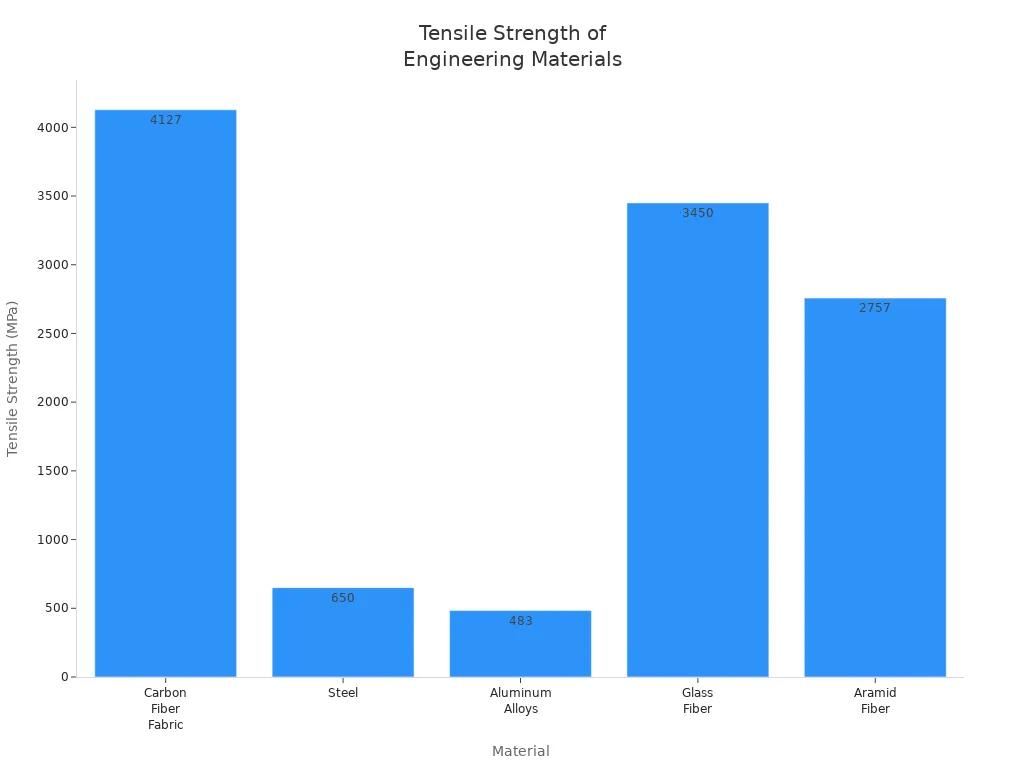
Steel is used a lot in building and making cars. It has been important for many years. Carbon fiber fabric is different from steel in many ways. It is lighter and stronger than steel. The table below shows how they compare.
| Property | Carbon Fiber Fabric | Steel |
|---|---|---|
| Density (g/cm³) | 1.6 (about 4.9 times lighter) | 7.85 |
| Tensile Strength (MPa) | Up to 6,000 | 400 – 1,200 |
| Modulus of Elasticity (GPa) | 70 – 294 | ~200 |
Carbon fiber fabric is much stronger for its weight than steel.
Steel is always stiff, but some carbon fiber fabrics can be just as stiff or even stiffer.
Carbon fiber composites are about one-fifth the weight of steel. This makes them great for planes and cars that need to be light.
| Material | Cost per Pound | Manufacturing Cost Impact | Notes |
|---|---|---|---|
| Carbon Fiber Fabric | ~$16 | Tooling and assembly costs can be reduced by up to 80% | High material cost currently overshadows manufacturing savings; price needs to drop ~60% to ~$5/lb to compete with steel |
| Steel | Lower | Simpler manufacturing, abundant raw materials | More economical for large volume industrial applications despite weight and corrosion susceptibility |
Note: Carbon fiber composites can make building things cheaper and faster. But the high price of carbon fiber fabric means steel is still cheaper for big projects.
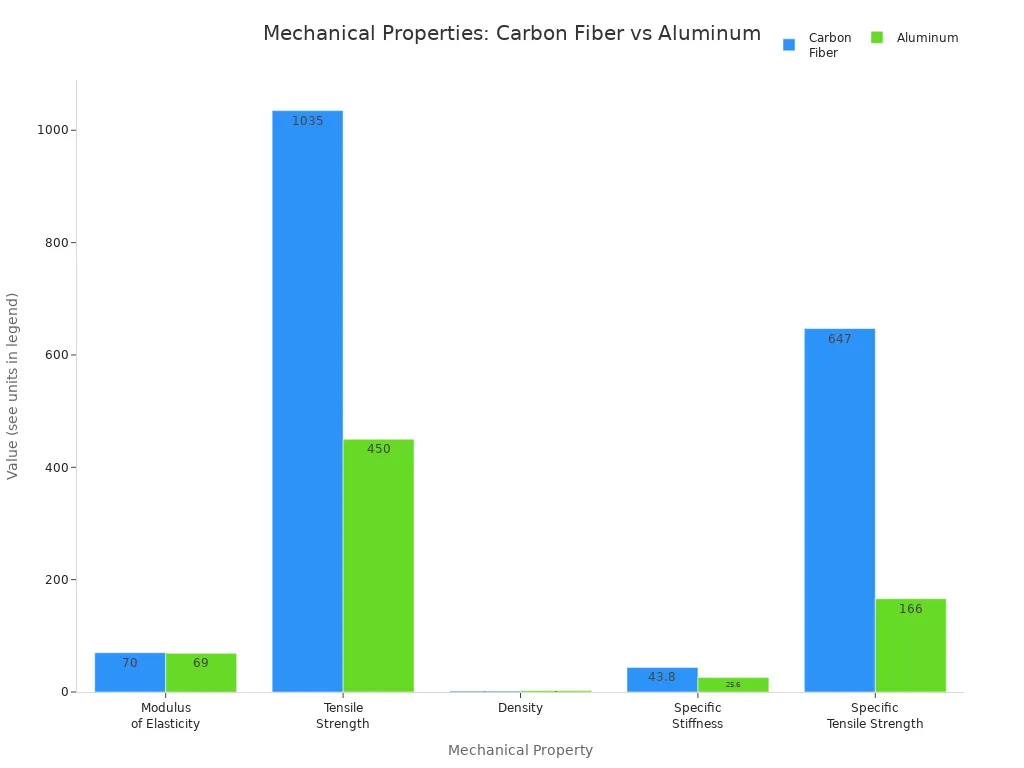
Aluminum is light and does not rust easily. But carbon fiber fabric is better in some ways. The table below shows how they compare.
| Property | Carbon Fiber | Aluminum | Relative Comparison |
|---|---|---|---|
| Modulus of Elasticity (GPa) | ~70 | ~69 | Approximately equal |
| Tensile Strength (MPa) | ~1035 | ~450 | Carbon fiber ~2.3 times higher |
| Density (g/cm³) | ~1.6 | ~2.7 | Carbon fiber ~59% of aluminum's |
| Specific Stiffness (E/ρ) | ~43.8 | ~25.6 | Carbon fiber ~1.7 times higher |
| Specific Tensile Strength (σ/ρ) | ~647 | ~166 | Carbon fiber ~3.9 times higher |
Carbon fiber fabrics are two to five times stiffer than aluminum if they are the same thickness.
Carbon fiber composites can be up to three times stronger than aluminum at the same thickness.
Using carbon fiber fabric instead of aluminum can make things almost half as heavy. This helps cars and planes move better and use less fuel.
Aluminum lets electricity flow, but carbon fiber can stop it.
Aluminum can handle more heat, but carbon fiber fabric is better for making strong, light things.
| Material | Density (g/cm³) | Weight Impact on Performance |
|---|---|---|
| Carbon Fiber | ~1.6 | Much lighter, helps cars and planes move better |
| Aluminum | ~2.7 | Heavier than carbon fiber, but lighter than steel; affects how things move and respond |
Tip: Carbon fiber composite parts help engineers make vehicles and planes that are lighter, stronger, and work better.
Fiberglass is another material used in boats, sports gear, and buildings. Both fiberglass and carbon fiber fabrics use fibers in resin, but they are not the same. The table below shows their differences.
| Property | Carbon Fiber | Fiberglass |
|---|---|---|
| Tensile Strength | 290,000 – 600,000 psi | 135,000 – 500,000 psi |
| Stiffness (Modulus) | 33 – 60 million psi | 2.8 – 10.5 million psi |
| Weight | 15% – 30% lighter than fiberglass | Heavier than carbon fiber |
| Cost per Pound | $10 – $20 | $1 – $3 |
Carbon fiber fabric is up to five times stronger than steel and much stiffer than fiberglass.
Fiberglass bends more and can take hits better, so it is good for things that need to be tough.
Carbon fiber fabrics are lighter, which helps in racing bikes and planes.
Fiberglass costs less and is easier to make in big amounts.
| Feature | Fiberglass (GFRP) | Carbon Fiber (CFRP) |
|---|---|---|
| Material Cost (per kg) | $2–$5 | $20–$50 |
| Manufacturing Cost | Low to moderate | High |
| Tooling Requirements | Basic molds | Specialized equipment |
| Repair Cost | Low | High |
| Production Scale | Suitable for mass production | Best for high-end, low-volume parts |
Note: Fiberglass is best for big, cheap projects. Carbon fiber fabric is better for things that need to be very strong and light.
Woven carbon fiber fabrics have fibers going in two ways. These ways are called warp and weft. The fibers cross each other at right angles. This makes the fabric strong and steady. Woven carbon fiber fabrics are strong in both directions. They work well for parts that face force from many sides. Engineers use woven carbon fiber fabrics in planes, cars, and boats. The woven style lets the fabric fit over tricky shapes. This makes it easy to put into molds. High-quality woven cloth lasts a long time and looks smooth. Woven carbon fiber fabrics come in many weave patterns. Each pattern has its own good points.
Unidirectional carbon fiber fabric has all fibers going one way. This gives the fabric lots of strength and stiffness in that direction. It does not have a woven look. A binder or resin keeps the fibers together. This fabric is thinner and lighter than woven carbon fiber fabrics. It is best for things that need strength in just one way, like beams or panels. Unidirectional carbon fiber fabric is cheaper and easy to make. But it does not bend well and needs layers for strength in other ways. In wet places, woven carbon fiber fabrics stay strong longer than unidirectional carbon fiber fabric.
| Aspect | Woven Carbon Fiber Fabrics | Unidirectional Carbon Fiber Fabrics |
|---|---|---|
| Fiber Orientation | Fibers woven in two perpendicular directions (warp & weft) | All fibers aligned in a single direction |
| Weave Patterns | Various patterns: plain, twill, satin | No weave; fibers held by resin or binder |
| Strength Distribution | Balanced strength in multiple directions | Very high strength along fiber direction |
| Thickness & Weight | Thicker and heavier | Thinner and lighter |
| Drapability | Good, fits complex shapes | Less drapable, needs layering |
| Cost & Complexity | More complex and expensive | Cost-effective and simpler |
| Applications | Aerospace, automotive, repair | Structural reinforcement, tension alignment |
Woven carbon fiber fabrics use different patterns to change how they look and work. The most common patterns are plain, twill, and satin. Plain weave looks like a checkerboard and is very steady. But the fibers bend more, so it can be less strong. Twill weave has a slanted pattern and bends better. This makes it easy to wrap around curves. Satin weave is smooth and shiny and bends the best, but it is not as steady.
| Weave Pattern | Stability | Drapability | Appearance | Crimp |
|---|---|---|---|---|
| Plain Weave | High | Moderate | Checkerboard | High |
| Twill Weave | Moderate | Good | Diagonal | Medium |
| Satin Weave | Low | Excellent | Smooth, lustrous | Low |
Tow size means how many carbon filaments are in each group. Small tows like 3K bend better and look smooth. They are good for small, detailed shapes. Big tows like 24K are used for thick parts where looks do not matter much. The weight of the cloth, tow size, and weave all change how strong, bendy, and easy to shape the fabric is. Buyers can pick woven carbon fiber fabrics in many tow sizes and weights to fit what they need.
Tip: Picking the right woven carbon fiber fabrics and weave pattern helps you get the best mix of strength, bendiness, and looks for your project.
Carbon fiber fabric is used in many industries. In aerospace, engineers use it to make planes, helicopters, drones, and air taxis. These parts are light but very strong and stiff. Car makers first used carbon fiber in race cars like Formula 1 and Indy cars. Now, more regular cars and NASCAR cars use it to go faster and weigh less. Boat builders use carbon fiber for racing and regular boats. These boats are lighter and move faster. In the last ten years, builders started using carbon fiber instead of steel in concrete, bridges, and repairs. Carbon fiber is stronger for its weight, does not rust, and lasts longer than old materials. It works well in windows, decks, columns, and fences. It also helps buildings last longer, even in bad weather.
Main industrial uses:
Aerospace: planes, helicopters, drones, air taxis
Automotive: race cars, regular cars
Marine: racing boats, regular boats
Civil engineering: bridges, concrete, repairs
Designers use carbon fiber fabric in new ways. It gives products a cool, modern look. Things like sunglasses, belts, and bags use carbon fiber because it is light and tough. Fancy watches and jewelry use carbon fiber to look special and stylish. Sports gear like golf clubs, racing bikes, and tennis rackets are stronger and lighter with carbon fiber. Sports clothes, like running shoes and jackets, use carbon fiber for comfort and less weight. The fashion world likes carbon fiber for its special feel and space-age style. Designers also like that carbon fiber lasts long and can be recycled. This mix of style and use lets designers try new ideas in fashion and products.
| Product Category | Benefits of Carbon Fiber | Examples |
|---|---|---|
| Designer Accessories | Light, tough, modern look | Sunglasses, belts, bags |
| Luxury Watches and Jewelry | Special style, tough, handmade feel | Chronographs, bracelets, cufflinks |
| High-End Sports Equipment | Better use, light, strong | Golf clubs, racing bikes, tennis rackets |
| Sports Apparel | More comfort, less weight, flexible | Running shoes, jackets, swimwear |
Carbon fiber fabric has some big limits. Making carbon fiber costs a lot because the main stuff, like PAN and pitch, is pricey. The way it is made is hard and uses a lot of energy. Every step must be done just right. This makes it slow and expensive to make. About half of the starting material gets wasted, which makes more trash and hurts the environment. The process also lets out gases that are bad for nature. Carbon fiber cannot get much stronger now, so making it better is hard. These things make it tough to use carbon fiber when money is tight. Even though carbon fiber is light and works well, its high price and hard making process mean it cannot be used everywhere.
Note: Carbon fiber fabric works great in many areas, but people should think about cost, how hard it is to make, and the effect on nature before picking it.
Carbon fiber fabric is special because it is strong but light. It lasts a long time and does not rust.
It helps people make new designs and saves money over time.
Many industries use carbon fiber fabric when they need things to be strong, light, and last long.
When picking materials, people should think about what their project needs, how well it should work, and the environment.
If you want to learn more about how carbon fiber fabric works, you can read books or look at websites for experts.
Carbon fiber fabric has carbon atoms packed close together. This makes it very strong when pulled. The way engineers weave it helps stop stretching and breaking. Steel can bend when heavy things push on it. Carbon fiber fabric stays strong and light instead.
Yes, you can use carbon fiber fabric outside. It does not rust or get damaged by weather. Makers put coatings on it to block sunlight and water. Many boats, bridges, and outdoor things use carbon fiber fabric because it lasts a long time.
Carbon fiber fabric is lighter and stronger than fiberglass. It is also stiffer. Fiberglass costs less money. But carbon fiber fabric is better for things that must be strong and light.
Engineers use carbon fiber fabric in cars, bikes, and sports gear. It does not let out bad chemicals when you use it. If you handle it the right way, carbon fiber fabric is safe for most uses.
Makers have plain, twill, and satin weaves.
Plain weave: Even strength, looks like a checkerboard
Twill weave: Has slanted lines, bends easily
Satin weave: Feels smooth and shiny, good for tricky shapes
Each weave changes how the fabric looks and works.


