
Views: 0 Author: Site Editor Publish Time: 2026-04-23 Origin: Site


Modern engineering needs lighter materials. Strength must remain high. Carbon Fiber Multiaxial Fabric solves this challenge. It spreads loads across many fiber directions and improves structural stability.
In this article, we explain Carbon Fiber Multiaxial Fabric structure, performance, and applications. You will learn how it strengthens modern composites and why high-quality fabrics like those from QingNiao support reliable engineering solutions. Learn more about our products.
Carbon Fiber Multiaxial Fabric is a composite reinforcement material composed of carbon fibers arranged in several directional layers. Instead of interweaving fibers in a traditional pattern, multiaxial fabrics align fibers at different angles such as 0°, 90°, and ±45°. These layers are stitched together to create a stable reinforcement structure. This configuration enables the fabric to provide strength in multiple directions simultaneously, which improves structural performance in complex load environments.
The multidirectional architecture of Carbon Fiber Multiaxial Fabric allows composite laminates to resist forces more effectively than single-direction reinforcement systems. Many engineering structures experience stress from multiple directions at the same time. Multiaxial reinforcement distributes these forces across different fiber layers, reducing localized stress concentration. This structural advantage helps improve durability, fatigue resistance, and long-term reliability in composite components used across aerospace, automotive, and infrastructure applications. Research into multiaxial reinforcement structures highlights how this layered orientation improves multidirectional load resistance and overall structural efficiency. :contentReference[oaicite:0]{index=0}
The structure of Carbon Fiber Multiaxial Fabric typically consists of multiple fiber layers stacked together in carefully designed orientations. Each layer contributes reinforcement strength along a specific direction. Engineers can customize these fiber orientations to match the load conditions expected in the final application. This design flexibility allows composite laminates to resist bending, shear, and torsional stresses simultaneously.
Unlike traditional woven fabrics, the layers in multiaxial carbon fiber fabrics are stitched rather than interlaced. Stitching helps maintain fiber alignment while preventing the fibers from shifting during manufacturing processes. The result is a stable reinforcement material that improves load transfer efficiency throughout the composite structure. This approach also enhances resin flow during composite molding, ensuring better bonding between the fibers and the matrix material. High-quality carbon fiber fabrics produced by specialized suppliers such as QingNiao demonstrate how precise weaving quality and stable fiber architecture can support consistent reinforcement performance in demanding engineering environments.
Traditional carbon fiber fabrics use woven patterns such as plain weave or twill. These woven patterns cause fibers to bend over and under each other during production. This bending is known as fiber crimp, and it reduces the efficiency with which fibers carry loads. When fibers are not straight, some of their strength is lost due to bending stresses.
Multiaxial carbon fiber fabrics avoid this limitation by maintaining straight fiber orientation. Because the fibers remain mostly uncrimped, they transfer loads more directly through the composite structure. This improves structural efficiency and increases the mechanical performance of the material. As a result, multiaxial fabrics are often preferred in large structural components where performance and durability are critical.
Property | Traditional Woven Fabric | Multiaxial Carbon Fiber Fabric |
Fiber orientation | Two directions | Multiple directions |
Fiber crimp | Moderate to high | Minimal |
Load distribution | Limited | Multidirectional |
Structural efficiency | Moderate | High |
Note: Multiaxial reinforcement is particularly beneficial when engineering structures must resist complex load conditions such as torsion and dynamic stress.
Fiber orientation is the defining feature of Carbon Fiber Multiaxial Fabric. Engineers can configure fiber layers in several orientations to match the expected stress conditions of the final structure. For example, fibers aligned at 0° typically carry tensile loads, while ±45° layers resist shear forces. A 90° layer provides transverse reinforcement that stabilizes the overall laminate.
This layered reinforcement strategy allows engineers to create balanced composite structures. When loads act on the structure, stresses are distributed across multiple fiber layers rather than concentrating in a single direction. This distribution improves structural stability and reduces the risk of crack formation or structural failure. Multiaxial reinforcement therefore enables designers to create stronger and more efficient composite components for industries such as aerospace, marine engineering, and automotive manufacturing.
Multiaxial carbon fiber fabrics are often referred to as Non-Crimp Fabrics. In these materials, fibers remain straight rather than being interwoven. Straight fibers allow loads to transfer efficiently along the fiber axis. Because carbon fibers are strongest when loaded along their length, maintaining straight fiber alignment maximizes mechanical performance.
The absence of fiber crimp also reduces internal stress concentration within the composite laminate. When fibers are bent during weaving, stress may accumulate at these curved points. Non-crimp architecture eliminates much of this bending, allowing loads to distribute more evenly throughout the structure. This design significantly improves stiffness and fatigue resistance. Many high-performance carbon fiber fabrics are manufactured using advanced weaving technologies that maintain precise fiber alignment and consistent structural quality, characteristics commonly emphasized in premium carbon fiber fabric systems. :contentReference[oaicite:1]{index=1}
Stitching technology holds the fiber layers together in multiaxial fabrics. Thin stitching threads pass through the fiber layers, stabilizing their orientation without significantly affecting mechanical performance. These stitching patterns are carefully designed to maintain structural integrity while allowing resin to flow freely during composite manufacturing.
The stitching process also improves manufacturing efficiency. During processes such as vacuum infusion or resin transfer molding, resin must penetrate the fiber layers completely. The open structure created by stitched layers facilitates resin flow, which improves fiber wet-out and bonding quality. Strong fiber-resin bonding is essential for achieving reliable composite performance in demanding structural applications.
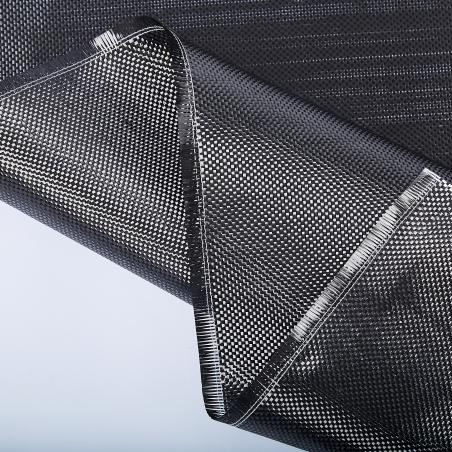
One of the most important characteristics of Carbon Fiber Multiaxial Fabric is its exceptional strength-to-weight ratio. Carbon fibers provide very high tensile strength while maintaining extremely low density. This combination allows engineers to create structures that are both strong and lightweight. Compared with traditional materials such as steel or aluminum, carbon fiber composites deliver higher performance with significantly less weight.
Weight reduction plays a critical role in many engineering systems. In transportation industries, lighter structures improve energy efficiency and reduce operational costs. Aircraft, electric vehicles, and high-speed rail systems all benefit from lighter structural materials. Carbon Fiber Multiaxial Fabric enables engineers to achieve these weight reductions while maintaining structural reliability.
Engineering structures rarely experience loads in only one direction. Aircraft wings, bridge supports, and marine hulls must withstand forces from multiple angles simultaneously. Multiaxial carbon fiber fabrics provide reinforcement across several directions, allowing structures to resist these complex stress patterns effectively.
This multidirectional reinforcement reduces structural weak points that may appear when loads change direction. Each fiber layer contributes strength along its orientation axis. When combined, these layers form a reinforcement system capable of handling bending, torsion, and shear forces simultaneously. This balanced load resistance improves overall structural stability.
Fatigue resistance is a major advantage of carbon fiber composites. Many engineering systems operate under repeated load cycles. Over time, these repeated stresses can weaken conventional materials such as metals. Carbon fibers maintain their strength even after millions of loading cycles, which significantly improves structural lifespan.
Multiaxial reinforcement enhances this fatigue resistance by distributing loads across multiple fiber directions. This distribution slows crack formation and prevents rapid crack propagation. For industries such as aerospace, marine engineering, and renewable energy, improved fatigue resistance reduces maintenance requirements and increases system reliability.
Carbon fiber composites offer excellent resistance to corrosion and environmental degradation. Unlike metal materials, carbon fibers do not rust when exposed to moisture or saltwater environments. When combined with polymer resins, they form composite materials that maintain structural integrity even in harsh conditions.
This corrosion resistance makes Carbon Fiber Multiaxial Fabric particularly valuable in marine engineering and infrastructure applications. Offshore platforms, boat hulls, and coastal bridges benefit from reinforcement materials that resist chemical exposure and moisture. As a result, composite structures require less maintenance and maintain performance over longer service periods.
Property | Engineering Advantage |
High strength-to-weight ratio | Lightweight structural design |
Fatigue resistance | Long service life |
Corrosion resistance | Suitable for harsh environments |
Thermal stability | Reliable performance across temperature ranges |
Manufacturing Carbon Fiber Multiaxial Fabric begins with precise fiber placement. Carbon fibers are laid out in sheets according to the required orientation angles. These sheets form reinforcement layers that will later be stitched together. Maintaining precise fiber orientation is critical because even small alignment errors can affect structural performance.
Once the fiber layers are arranged, stitching threads secure them together. This process ensures that the reinforcement architecture remains stable during further manufacturing stages. Accurate layer preparation ensures that the final composite laminate achieves the intended mechanical properties and structural strength.
Resin Transfer Molding is one of the most widely used manufacturing methods for composite structures reinforced with multiaxial fabrics. In this process, dry fiber reinforcement is placed inside a closed mold. Liquid resin is then injected into the mold under pressure, filling the spaces between the fibers.
RTM produces composite components with excellent fiber-resin bonding and minimal internal defects. High fiber volume fractions achieved during this process improve mechanical strength and stiffness. Because the mold is closed, RTM also ensures consistent component quality, which is essential for structural applications in aerospace and automotive industries.
Vacuum-assisted resin infusion is commonly used to produce large composite structures. In this process, fiber reinforcement layers are placed inside a mold and covered with a vacuum bag. Resin is drawn through the fabric using vacuum pressure, ensuring complete fiber wet-out.
This technique improves resin distribution and reduces void formation within the composite laminate. As a result, the final component exhibits improved mechanical strength and durability. Vacuum infusion is widely used for large components such as wind turbine blades, marine structures, and infrastructure reinforcement systems.
Tip: Engineers should evaluate resin compatibility and curing conditions carefully because improper resin systems can reduce bonding strength and composite durability.
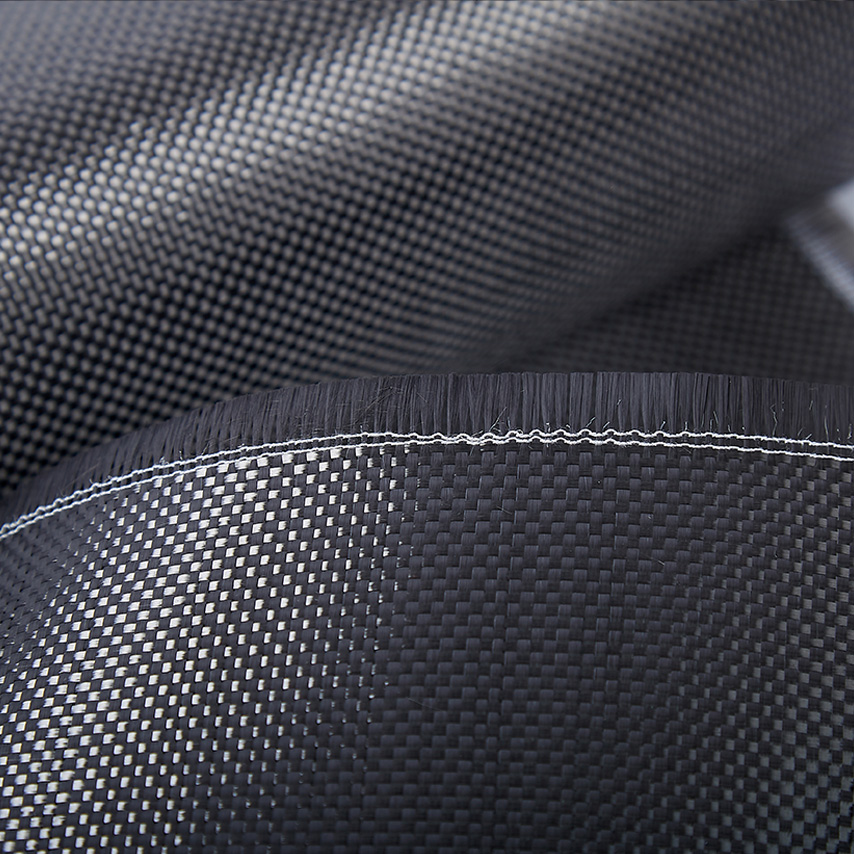
The aerospace industry depends heavily on lightweight structural materials. Aircraft structures must withstand aerodynamic forces while maintaining minimal mass. Carbon Fiber Multiaxial Fabric provides reinforcement capable of distributing loads efficiently across aircraft components.
Fuselages, wing panels, and internal structural frames frequently use carbon fiber composite laminates. The multidirectional reinforcement provided by multiaxial fabrics improves stiffness and fatigue resistance while reducing overall aircraft weight. Lighter aircraft structures require less fuel, improving efficiency and lowering operating costs.
Automotive manufacturers increasingly use carbon fiber composites to improve vehicle performance. Carbon Fiber Multiaxial Fabric is used in chassis systems, battery enclosures, and body panels. These components benefit from reduced weight and improved structural strength.
Electric vehicles particularly benefit from lightweight composite structures. Lower vehicle mass improves battery efficiency and extends driving range. Multiaxial reinforcement also enhances crash resistance by distributing impact energy across multiple reinforcement layers.
Marine environments are extremely demanding due to saltwater exposure and constant wave loading. Carbon fiber composites maintain structural stability in these conditions because they resist corrosion and fatigue damage. Multiaxial fabrics distribute wave loads effectively, improving hull stiffness and durability.
Infrastructure reinforcement increasingly relies on composite materials. Carbon fiber fabrics are used to strengthen bridges, buildings, and concrete structures. Multiaxial reinforcement distributes loads across multiple directions, improving structural safety and extending infrastructure lifespan.
Industry | Typical Applications |
Aerospace | Aircraft structures, wings |
Automotive | Chassis, battery enclosures |
Marine | Boat hulls, offshore structures |
Infrastructure | Bridge reinforcement, building upgrades |
Carbon Fiber Multiaxial Fabric strengthens modern composites and reduces structural weight. Its multidirectional fibers improve durability and load distribution. High-quality fabrics from QingNiao provide stable reinforcement, precise fiber alignment, and reliable performance for demanding engineering applications.
A: Carbon Fiber Multiaxial Fabric is a composite reinforcement with fibers in multiple directions, improving structural strength and load distribution in advanced composite applications.
A: Carbon Fiber Multiaxial Fabric improves durability, fatigue resistance, and lightweight performance in aerospace, automotive, and infrastructure composite structures.
A: Its multidirectional fiber layout spreads loads evenly, reducing weak points and improving stiffness and long-term durability in composite reinforcement systems.
A: For complex loads, Carbon Fiber Multiaxial Fabric offers better load distribution and structural efficiency than traditional woven carbon fiber fabrics.


