
Views: 0 Author: Site Editor Publish Time: 2026-04-25 Origin: Site


Modern engineering needs stronger, lighter materials. Carbon Fiber Multiaxial Fabric is widely used in advanced composites. But how do you choose the right one? In this guide, you will learn key factors for Carbon Fiber Multiaxial Fabric selection and engineering use. High-quality fabrics such as QingNiao carbon fiber fabrics show how precise fiber alignment improves composite performance. Learn more about our products.
Carbon Fiber Multiaxial Fabric is a reinforcement material used in advanced composite manufacturing. Instead of interlacing fibers like traditional woven materials, it arranges carbon fibers in several orientations within the same layer. Common orientations include 0°, 90°, and ±45°. This configuration allows engineers to design structures that handle loads from multiple directions without requiring additional fabric layers.
The fabric structure is usually produced using stitching or warp-knitting techniques. These methods hold the fibers together without forcing them to bend over and under each other. As a result, the fibers maintain their natural straight alignment, which improves tensile efficiency and structural stiffness. This design allows multiaxial fabrics to maintain high mechanical performance under demanding conditions. Engineers prefer this material when projects require reliable reinforcement and consistent structural strength across complex load paths.
Multiaxial carbon fiber fabric has become a critical reinforcement material across several engineering sectors. Large structural systems rarely experience forces in a single direction. Wind turbine blades face rotational stress and bending loads. Aircraft panels must resist aerodynamic pressure and vibration. Marine structures experience wave loads and torsional forces simultaneously. Multiaxial fabrics help distribute these loads efficiently.
Another reason engineers choose Carbon Fiber Multiaxial Fabric is its manufacturing efficiency. Because the fibers are stitched rather than woven, the fabric has better permeability for resin flow. During vacuum infusion or resin transfer molding, resin spreads evenly through the structure. This improves fiber bonding and reduces the risk of voids or weak zones in the final composite. These advantages make multiaxial fabrics ideal for high-performance engineering applications.
The structural characteristics of Carbon Fiber Multiaxial Fabric directly influence composite performance. One major characteristic is the non-crimp architecture. In woven materials, fibers bend repeatedly through the weave pattern. This crimp reduces the effective strength of the fibers. Multiaxial fabrics eliminate this issue by keeping fibers straight and aligned.
Another important feature is customizable fiber orientation. Engineers can combine different angles in the same fabric layer to match structural load conditions. This flexibility improves laminate design efficiency and reduces the need for multiple reinforcement layers. In large composite structures, this optimized fiber arrangement helps improve fatigue resistance, load transfer efficiency, and long-term durability.
Note: Multiaxial fabrics are often called non-crimp fabrics (NCF) in composite engineering literature.
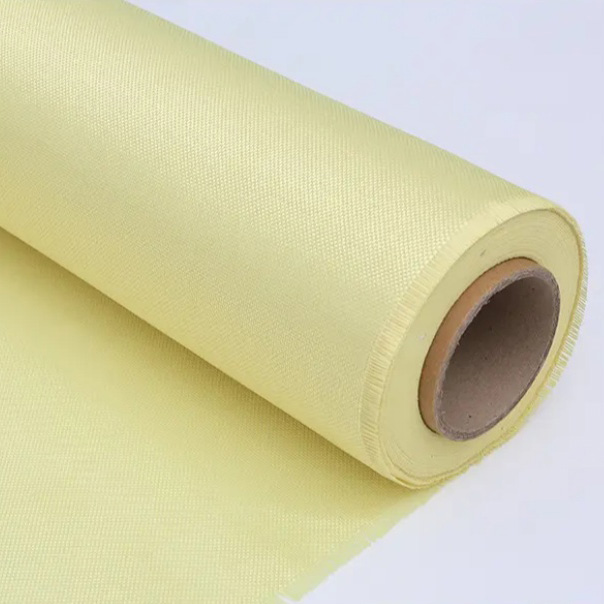
Fiber orientation is one of the most important considerations when selecting Carbon Fiber Multiaxial Fabric. Different structures experience forces from different directions. Engineers must align fiber orientation with the expected load paths to achieve optimal reinforcement.
For example, fibers arranged at 0° provide strong resistance to longitudinal tension. Fibers placed at 90° improve transverse strength and dimensional stability. Meanwhile, ±45° fibers help resist shear stress and torsional loads. When these orientations are combined in a multiaxial structure, the fabric can handle complex mechanical forces efficiently.
Selecting the correct fiber orientation improves structural efficiency and reduces material waste. If fibers are not aligned with load directions, the composite may require additional reinforcement layers. This increases weight and production cost. Proper orientation design ensures that the structure remains strong while maintaining lightweight characteristics.
Carbon Fiber Multiaxial Fabric is available in several configurations depending on engineering requirements. Each configuration includes different fiber orientations and reinforcement levels. Engineers must select the configuration that best matches the structural complexity of their project.
Fabric Configuration | Fiber Orientation | Structural Characteristics | Typical Applications |
Biaxial Fabric | 0° / 90° or ±45° | Reinforcement in two directions | Automotive panels |
Triaxial Fabric | 0° / +45° / −45° | Improved shear resistance | UAV structures |
Quadraxial Fabric | 0° / 90° / ±45° | Multidirectional load distribution | Wind turbine blades |
Biaxial fabrics are suitable for moderate structural loads where reinforcement in two directions is sufficient. Triaxial fabrics add additional reinforcement angles to improve resistance to shear forces. Quadraxial fabrics provide the most balanced reinforcement and are widely used in large structural components that experience multidirectional stress.
Fabric weight and thickness significantly influence composite performance and manufacturing efficiency. Carbon fiber fabrics are typically measured in grams per square meter (gsm). Lightweight fabrics allow designers to build structures with minimal weight while maintaining strength. These materials are common in aerospace and high-performance automotive applications.
However, heavier fabrics provide higher load capacity and structural rigidity. Marine structures, wind turbine blades, and bridge reinforcement systems often require thicker fabrics to handle large mechanical forces. Designers must balance structural strength and material weight carefully.
Fabric Weight (gsm) | Approx Thickness | Structural Strength | Typical Applications |
200–300 gsm | 0.25–0.35 mm | Medium | Automotive panels |
300–450 gsm | 0.35–0.6 mm | High | Marine structures |
450–600 gsm | 0.6–0.8 mm | Very High | Infrastructure reinforcement |
Selecting the correct weight ensures the composite performs well without increasing unnecessary mass. Lightweight materials improve energy efficiency, while heavier fabrics provide stronger reinforcement for structural systems.
Tip: When designing large composite structures, combine multiple lightweight layers instead of a single heavy layer to achieve better load distribution and manufacturing control.
Carbon Fiber Multiaxial Fabric must be compatible with the resin system used during composite manufacturing. Resin systems such as epoxy, polyester, and vinyl ester each have different curing temperatures, viscosity levels, and bonding properties. Selecting the right combination ensures strong adhesion between the fibers and the resin matrix.
Manufacturing processes also influence fabric selection. Vacuum infusion, resin transfer molding (RTM), and prepreg processing require fabrics with specific permeability and handling properties. Multiaxial fabrics generally perform well in these processes because their stitched structure allows resin to flow evenly between fibers.
Proper compatibility between materials and manufacturing methods improves production efficiency and reduces the risk of defects. Engineers often conduct small-scale testing before large-scale production to confirm that the chosen fabric and resin system work effectively together. Material suppliers such as QingNiao often optimize their carbon fiber fabrics for strong resin wet-out and consistent processing performance, helping manufacturers maintain stable composite quality during large-scale production.
Woven carbon fiber fabrics are among the most common reinforcement materials in composite manufacturing. They consist of fibers interlaced in two directions, usually referred to as warp and weft. This structure creates a stable fabric with balanced mechanical performance and good dimensional stability. Plain weave and twill weave fabrics are widely used across automotive, sporting goods, and industrial applications.
Plain weave fabrics offer a tight and stable structure. They are often used in applications where strength and structural consistency are important. Twill weave fabrics, on the other hand, provide greater flexibility and improved drapability. This makes them easier to apply to curved surfaces such as aerodynamic panels or automotive body components. Because of their visual pattern and smooth finish, twill fabrics are also common in decorative composite products.
Unidirectional carbon fiber fabric aligns all fibers in a single direction. This structure maximizes strength and stiffness along that axis. Engineers use this type of reinforcement when the load direction is clearly defined. For example, wind turbine blades experience strong longitudinal forces along their length. Unidirectional fabrics provide efficient reinforcement in such conditions.
Although unidirectional fabrics provide excellent directional strength, they offer limited reinforcement in other directions. To overcome this limitation, engineers often combine several layers oriented at different angles. This layered design creates a balanced laminate structure capable of handling multidirectional loads.
Multiaxial carbon fiber fabric combines fibers oriented in several directions within a single stitched layer. This structure eliminates fiber crimp and maintains high tensile performance. The fabric provides balanced strength across multiple axes while reducing the number of layers required in a composite laminate.
Multiaxial fabrics are widely used in industries that require large and durable composite structures. Wind energy systems, marine vessels, aerospace structures, and bridge reinforcement projects frequently use this material. Its ability to distribute forces across multiple directions improves structural reliability and reduces the risk of localized stress failures.
Fabric Type | Fiber Orientation | Advantages | Typical Industries |
Woven Fabric | 0° / 90° | Stable structure | Automotive |
Unidirectional Fabric | Single direction | Maximum directional strength | Aerospace |
Multiaxial Fabric | 0° / 90° / ±45° | Multidirectional reinforcement | Marine, wind energy |
Carbon Fiber Multiaxial Fabric plays a major role in aerospace engineering because aircraft structures must remain extremely strong while keeping weight as low as possible. In aviation design, every kilogram of weight affects fuel consumption, flight range, and payload capacity. Engineers therefore prefer composite materials that offer a high strength-to-weight ratio. Multiaxial carbon fiber fabrics meet this requirement by providing reinforcement in multiple directions without increasing laminate thickness.
Aircraft fuselage panels, rotor blades, UAV frames, and structural support elements frequently use multiaxial fabrics. These components experience aerodynamic pressure, vibration, and repeated fatigue loads during flight. Because the fibers are oriented at several angles, the fabric distributes these forces across the entire composite structure. This balanced load distribution improves structural reliability and reduces the risk of localized failure. As aerospace materials continue to evolve, manufacturers increasingly rely on high-quality carbon fiber fabrics produced with precise fiber alignment and stable weaving technology to maintain consistent mechanical performance.
The automotive industry is one of the fastest-growing users of carbon fiber composite materials. Vehicle manufacturers are constantly seeking ways to reduce overall weight while improving safety and structural durability. Carbon Fiber Multiaxial Fabric helps achieve these goals because it strengthens critical components without adding excessive mass. Lighter vehicles consume less energy and provide better acceleration, which is particularly important for electric vehicles and high-performance cars.
Multiaxial fabrics are commonly used in vehicle chassis structures, battery enclosures, crash-resistant panels, and reinforcement beams. These components must withstand multidirectional stresses during driving conditions, including torsion, vibration, and sudden impacts. Because multiaxial fabrics contain fibers arranged in multiple orientations, they provide more balanced structural support than traditional woven materials. High-quality carbon fiber fabrics with consistent fiber distribution also improve the appearance of exposed composite parts, which is important for performance vehicles and advanced automotive design.
Marine engineering requires materials that can withstand harsh environmental conditions such as saltwater exposure, humidity, and continuous mechanical loading from waves. Carbon Fiber Multiaxial Fabric performs well in these environments because carbon fibers are naturally resistant to corrosion and fatigue. When combined with durable resin systems, these fabrics form composite structures that remain stable even under long-term environmental stress.
Boat hulls, decks, bulkheads, and offshore structural panels frequently use multiaxial carbon fiber fabrics. The multidirectional fiber architecture allows these structures to handle complex load conditions generated by waves and vessel movement. Compared with traditional metal reinforcement, composite structures built with carbon fiber fabrics reduce structural weight while improving stiffness and durability. This advantage is especially valuable for high-performance vessels and large marine platforms that require both strength and efficiency.
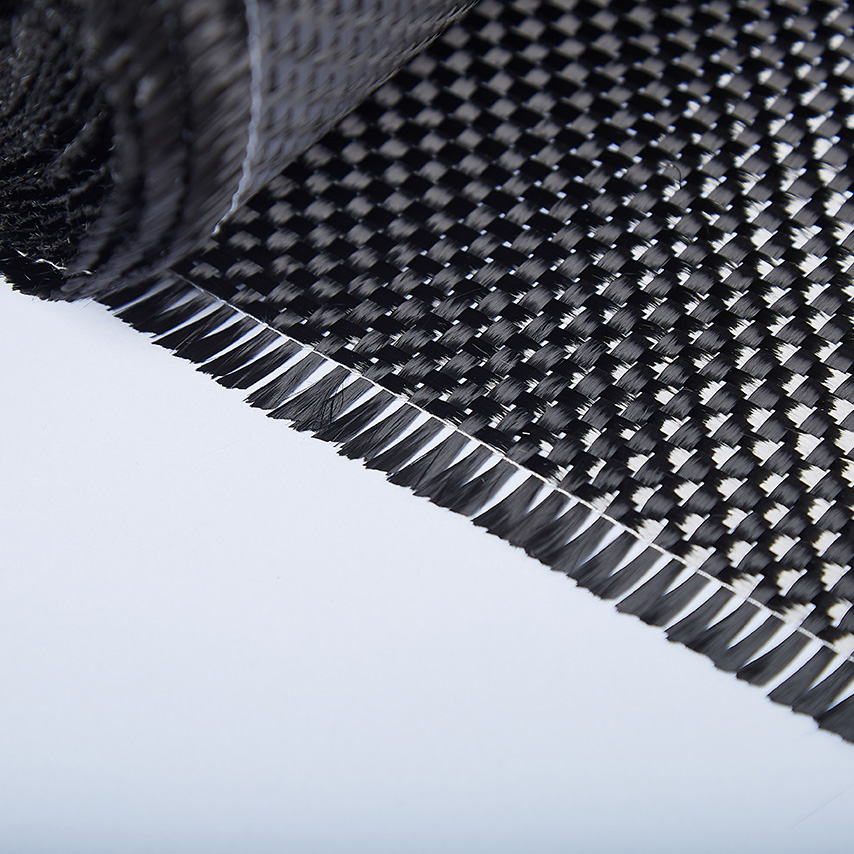
Selecting the right Carbon Fiber Multiaxial Fabric supplier is as important as selecting the material itself. Reliable suppliers maintain strict manufacturing standards to ensure consistent fiber alignment, clean fabric surfaces, and stable mechanical properties. These characteristics directly influence the performance of the final composite structure. If fiber bundles are uneven or misaligned, the composite laminate may develop weak areas that reduce its overall strength.
Professional carbon fiber manufacturers typically conduct mechanical testing such as tensile strength tests and modulus verification to ensure product consistency. These tests confirm that the material meets industrial requirements for structural reinforcement. Suppliers that provide clear technical specifications, quality certifications, and laboratory testing results usually offer more reliable materials for demanding engineering projects.
Many advanced composite projects require customized reinforcement materials rather than standard fabrics. Engineers may need specific fiber orientations, fabric widths, or hybrid reinforcement structures depending on their design requirements. A reliable supplier should therefore offer flexible customization options and technical support during the material selection process.
Some manufacturers specialize in producing carbon fiber fabrics with multiple weaving styles, fiber counts, and hybrid material combinations. These customization capabilities allow engineers to optimize composite structures for both performance and manufacturing efficiency. Companies such as QingNiao, which focus on high-performance carbon fiber fabrics and composite material solutions, demonstrate how experienced suppliers can support engineers through material selection, fabrication guidance, and large-scale supply stability. Working with technically capable suppliers ensures that the chosen Carbon Fiber Multiaxial Fabric performs reliably in real engineering environments.
Large engineering projects require stable material supply and consistent product quality over long production cycles. When evaluating suppliers, engineers should consider factors such as production capacity, raw material sourcing, and international logistics capability. A supplier that maintains a stable supply chain can prevent delays during composite manufacturing.
Experienced carbon fiber manufacturers usually maintain integrated production systems that cover fiber weaving, fabric finishing, and composite processing support. This type of production capability ensures consistent fabric quality across multiple batches. For industries such as aerospace, automotive, and infrastructure construction, supply stability is essential for maintaining production schedules and product reliability.
Choosing a supplier with strong production capability, reliable quality control, and global delivery experience helps ensure that Carbon Fiber Multiaxial Fabric can be delivered consistently for both prototype development and large-scale manufacturing.
Choosing the right Carbon Fiber Multiaxial Fabric improves composite strength and efficiency. Engineers must consider fiber orientation, weight, and resin compatibility. High-quality materials such as QingNiao carbon fiber fabrics provide stable fiber alignment and reliable performance, supporting durable and lightweight engineering structures.
A: Carbon Fiber Multiaxial Fabric is a reinforcement material with fibers arranged in multiple directions to improve composite strength and structural stability.
A: Evaluate fiber orientation, fabric weight, and resin compatibility when choosing Carbon Fiber Multiaxial Fabric for composite structures.
A: Multiaxial Carbon Fiber Fabric provides better multidirectional strength and reduces fiber crimp, improving overall composite performance.
A: Carbon Fiber Multiaxial Fabric applications include aerospace parts, marine structures, wind turbine blades, and automotive components.


